Wys tans plasings met die etiket Leadership. Wys alle plasings

Saterdag 14 Januarie 2012

ANIMAL WELFARE - IT JUST TAKES A FEW MINUTES

Even if you don't have a lot of time you can help make a difference to the welfare of dogs, other domesticated and non-domesticated animals by taking a few minutes once a week you can make a difference - and it does not have to cost you any money!

Three simple ways to choose from...

One - You can sign a petition;
Two - You can donate a tweet;
Three - You can click to give free food and care to a homeless pet.

It is quick and easy, I will provide you with the links below! 
If you don't believe doing so will make a difference you are wrong! 


When enough people pitch-in we do have the power to make change. Here are a few very recent examples for you...

A man in Greece lured and then beat three defenceless dogs with a sledge hammer - one died, the other three survived, only because some people came by in time to see what this man was doing. The two surviving dogs, although horrifically injured they underwent extensive surgery and are now recovering. A petition was started to try to persuade the Greek authorities to take action. Well enough of us signed to make a difference - we spoke for those poor dogs who could not speak for themselves. More than 20,000 signatures. Well the trial occurred this week of January 9th, 2012 . Due to the pressure exerted by all of the signatures –  for the first time in modern Greek history a proper sentence (if there can said to be one) was imposed on the man – jail time and $10,000 (US $). Those few seconds it takes to sign can make a difference!

Another one I signed – a man had his gentle service dog taken away (in the USA) just because it was a Pit Bull mix, again so many people signed the petition the dog was returned and taken off of death row last week.

And this week I received notice that Bones the Pit Bull - was released to a rescue organization. Bones, like so many Pit Bulls had no choice about who acquired him. He was purchased by a man in NYC who was a thug. The man murdered an acquaintance and just because Bones was owned by the murderer, Bones was condemned to death. Well, a petition went out and enough of us signed and emailed. This week I received notice from the NYC Department of Health & Mental Hygiene that they had decided to release Bones and not euthanize him - the pressure was too great - they have given him over to a rescue group. Bones is a beautiful boy and can now have the opportunity to live the life he deserves to live - to be loved and to give love like only a dog can.


We all have the opportunity to help change the future!

So if you would like to donate even a few minutes a week to support animal welfare, here are some excellent sites that will help you contribute to making the world a better place for our animals.

Petition Sites...

You can go to any of these sites to choose a petition of your choice to support. Most of these sites also have petitions for environmental causes as well.
If you do not have time to look yourself, you can always follow me on twitter as I tweet to share and exchange information (with other animal welfare advocates) many animal welfare petitions.


Center for Biological Diversity

Donate a Tweet...

If you do not want to sign petitions, but would still like to help you can choose an organization to donate a tweet to on a daily basis by going to JustCoz.Org, just browse and choose.


Donate a Click - The Corporate Sponsors Donate Food and Care
This costs you nothing but your time, when you click the sponsors donate food and care...


The Animal Rescue Site - Click to Provide Food and Care for Pets in Need

CARE 2 - Click to Feed Pets In Need 

Freekibble - Click to Feed Dogs 

Freekibble - Click to Feed Cats 

And my dogs would like to say thanks to you for reading this and helping other dogs and animals who need help!


Robbie


Abby
Jordie
Tasha
Sarah
Buddy
Stevie
Zoey
Carmen
Jacob
Thank you everyone, woof :>)


Woensdag 04 Januarie 2012

TYPES OF AGGRESSION IN DOGS & HOW TO AVOID CREATING IT

The most common types of aggressive-reactive behaviour in dogs result from the dog being...

A - Insecure, nervous, tense, fear based reactivity;

B - Bullying, dominating reactivity.

When these psychological conditions noted above are not addressed and resolved a dog may become:
  • Fearful reactive-aggressive, or;
  • Defensive reactive-aggressive, or;
  • Offensive reactive-aggressive.
Some typical signs of these behaviors are:

  • Fearful reactive-aggressive - backing away, trembling, low growl, whale eyes.
  • Defensive reactive-aggressive - barking, bared teeth, growling,  fearful body posture (lowered head, tucked tail, ears back, whale eye) and may back away.
  • Offensive reactive-aggressive - barking, bared teeth, growling,  offensive body posture (direct eye contact, erect ears, high tail) while moving or charging forward.


This behaviour may be directed at animate objects such as dogs or other non-human animals, at humans and at inanimate objects as well.

As an example most aggression in dogs occurs due to lack of leadership in the dog’s life - in the absence of proper direction a dog may become anxious, insecure and fearful. If dogs were pre-wired to be aggressive rather than social there would be very few dogs left standing. A dog in its natural state is a social being, a pack animal with the potential inherent to get along with others.  There are very few dogs born with 'bad wiring’. When a dog goes bad it is almost always a human who is responsible for the bad behaviour.

When puppies are young they learn their social skills from the adult dogs in their dog family. Now, as long as the adult dogs’ natural social state has not been negatively disrupted by human influence the adult dogs will teach their young how to get along without being aggressive. If you are thinking - yeah but what about the 'Alpha' - dominate dog...you need to read this.

Things go wrong when we humans...

A - Separate the dog from its early socialization processby removing the puppy from its parents and then;

B - We fail to take up the leadership role to coach and mentor the dog in the acquisition and maintenance of social skills - providing rules and boundaries.

In this day and age of technology and our fast paced-life we have lost an awareness of all of the ways in which we communicate. We have lost patience. We attempt to direct our dogs - we assume we know what we are doing - but most often people do not. 

A dog learns aggressive-reactive behaviour because a human enables the behaviour in a dog. Either by failing to provide leadership or by actively abusing the dog. Usually when a human enables the aggression it has happened by accident - completely unintentionally.

Here are some typical ways that dogs develop aggressive reactive behaviour…

A - Dogs that lack proper coaching and mentoring can become insecure, anxious and fearful. When a dog is insecure it will either be overly submissive or overly defensive. We see these same behaviours in people as well. If you are insecure, anxious or fearful you are either going to recede into the background or overcompensate by being a bully - it is the same for dogs. If your dog is nervous around humans or other dogs and you are nervous too - you tell your dog it is right to be worried. You enable the behaviour. If your dog has been attacked in the past by another dog and you are unable to let the past go, you enable your dog’s nervousness and aggression towards the other dog.

B - Dogs who receive the wrong type of affection at the wrong time can become aggressive-reactive. When you reward a dog for being in an excited state the dog learns that being excited is good. When a little dog is insecure and starts to react (snarl, growl, snap, bark) at a bigger dog - if you pick the little dog up, you have just rewarded the little dog for reactive behaviour. Your dog learns that reactive aggressive behaviour is ok.

C - Dogs who are allowed to take-over their humans, their homes, their toys, the furniture etc. without any rules that they can understand - these dogs can become aggressive. The rule - they own and the human fears to intercede. The human has inadvertently taught the dog to be a bully.

D - A dog has been abused by humans - this can make the dog insecure and fearful - the dog will seek to protect itself. To stop this behaviour you must help the dog gain confidence, you must show the dog that there are other ways to navigate through life - just as you would do for a person. You can read my Boxer Robbie’s storyif you want to understand more about this cause and affect.

So, aggression is normally induced by humanity. No dog wants to be bad. All dogs want to have the opportunity to receive fair instruction, coaching and mentoring to help them be social happy members of society - the same thing that a child wants. Children don’t want to be bad - but when they lack the proper guidance, just like a dog they have little choice.

When we do not take the opportunity to correct the dog in a respectful, firm way without anger, fear or other emotions we create psychological damage in the dog. We miss an opportunity to change future outcomes - we make one more mistake in the dogs’ life - we set the dog up for future failure…just as we would be doing with a human.
  
The great thing about dogs is that they are easier to psychologically rehabilitate than humans are. Why, because dogs do not hold grudges. Because dogs live in the moment it is easier to change a dog's 'bad habits' than it is a human's. Humans carry grudges, dogs do not. Dogs are very forgiving and will, given the opportunity treat each day, each experience as a new beginning. It is only with difficulty that we are able to convince, permit and allow ourselves to do the same.


Patience, will, determination, persistence, respect and a little understanding of dog and human psychology are key. Coach and mentor the dog, train its human.

A dog is willing to give so much to their human - but what is the human willing to give to the dog?  


To enable the best in your dog you must think beyond yourself, your momentary needs your emotions. I believe you must broaden your understanding of affection, leadership and partnership. You must understand how dogs communicate and how you can unintentionally communicate the wrong thing. You must understand how dogs assign respect. You must understand what leadership really is and is not. And you should understand that there are many ways to share affection with your dog. Only when your have truly understood these concepts will you be in a position to enable the best in your dog.

If you learn to look at every element of your relationship in a more dynamic and holistic fashion you can learn to combine what you want with what your dog requires.

To have a happy, well balanced canine companion the human needs to make sure that they fullfill the needs of their dog. This is where it so often all goes wrong. Many of us, with the best of intentions, do not realize (that just because we love our dog and ensure we provide it with lots of affection the best of food, treats, a comfy place to sleep, etc.) that we have not met our dog's needs in a way that will best benefit them. 

To understand more about how to best support your dog and avoid the development of aggressive reactive behaviours you can read these articles.

Communication


Leadership


---------------------------------------------------------------------------------------------------------------------
  • Training;
  • Behaviour Modification;
  • Rehabilitation;
  • Nutrition;
  • Health
Whether you are experiencing dog behavior problems and would like assistance, or just want to bring your dog up to be a well-balanced canine -  I offer both a local and international service for people with one or multiple dogs. 

I work with all breeds - from small (i.e. Yorkie, Pomeranian, Chihuahua, etc.), medium breeds size (including Pit Bulls) and large breed dogs...
 
International e-Consultation 
Sessions, Advice via email for National and International Clients - Dog Training, Puppy Training, Behaviour Modification, Nutrition, Health 

In-person SessionsDog Training, Puppy Training, Behaviour Modification, Rehabilitation – Ottawa, Ottawa Area, Outaouais, Ottawa Valley

---------------------------------------------------------------------------------------------------------------------

Donderdag 22 Desember 2011

TO CURE YOUR DOG'S MOTION SICKNESS


The only way to cure motion sickness is to face the situation head-on, do not avoid - if you avoid taking your dog in the car because of motion sickness your dog will never normalize the experience. Patience, determination, repetition is the only way to cure this condition.
  
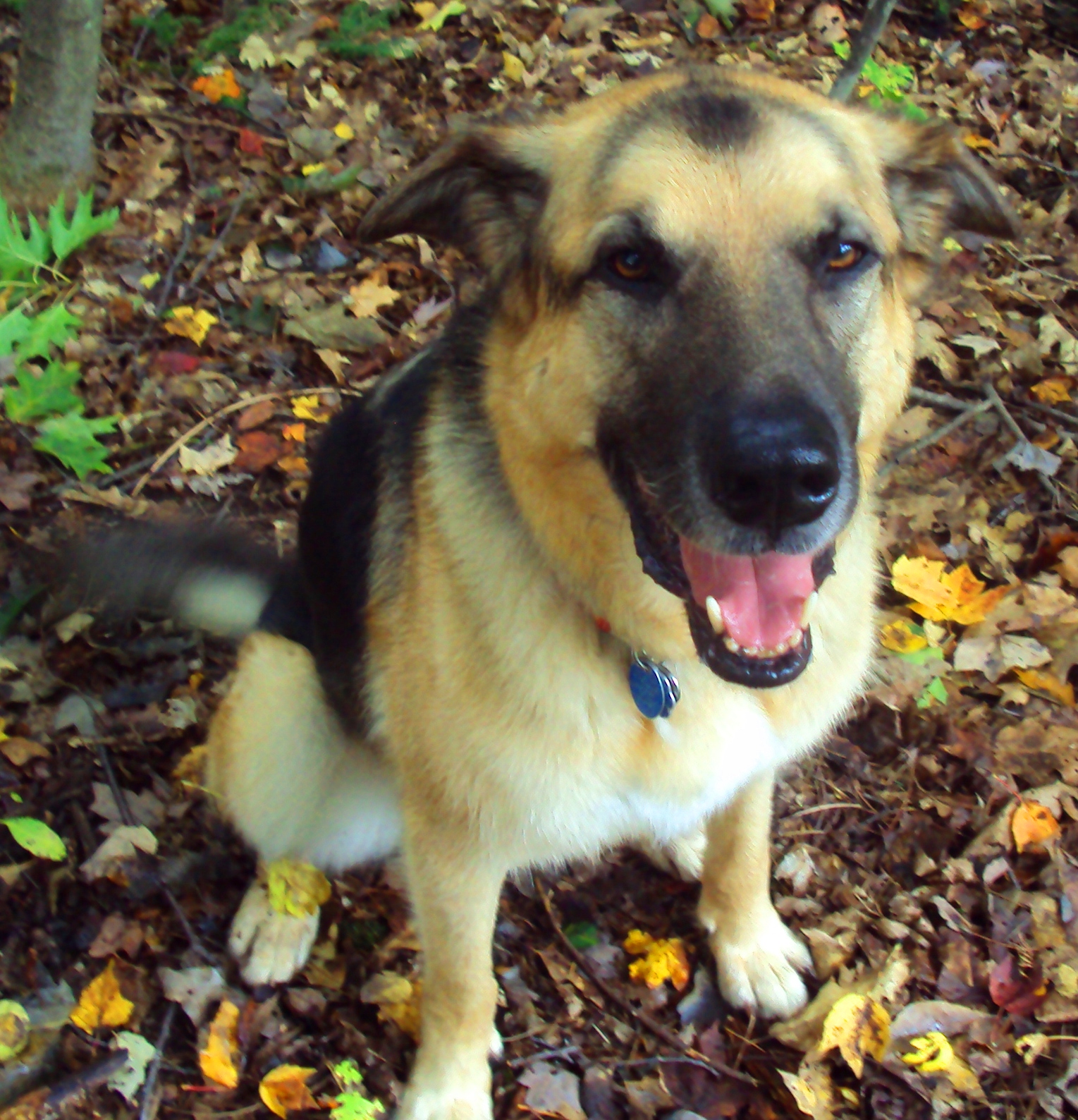
My dog, Jordie (a German Shepherd x Alaskan Malamute) is an excellent example of how you can cure motion sickness in your dog. Like people, some dogs just acquire motion sickness. Jordie is a rescue from Iqaluit, Nunavut, Canada. Iqaluit is a northern climate where these dogs are used as sled dogs. Spay and neuter is not commonly practiced - there are many unwanted litters of puppies. When no one wants the puppies they are shot to death. Jordie and his litter mates were to be shot - the rescue group that I fostered for found someone willing to fly the puppies out the day before they were to be shot. The next day Jordie joined my pack. The entire litter were sick on the flight out of Iqaluit - they were only 10 weeks old, stressed, underfed. As a result Jordie developed a severe case of motion sickness.

On the way home after I picked Jordie up he threw-up in the car. It was August, 30o Celsius, this poor little guy had spent his entire 10 weeks of life up north in deep cold, he had been neglected, flown on a plane and now put in a car!


The next time I took Jordie for a ride in the car he threw-up again. The third time I put Jordie in the car he started to pant, drool and foam at the mouth and then proceeded to throw-up. I realized that I would have to cure Jordie of motion sickness and an aversion to traveling.

When Jordie sensed I was getting ready to take him for a ride in the car he hid. I would go looking for him - I would find him in his hiding spot drooling, foaming, ears down. I knew that if I gave in and did not make him go through the repeated experience of riding in the car he would never be cured. So I persisted in taking Jordie with me in the car. 

As Jordie associated travel with stress I needed to show him that travel was OK...with patience and persistence Jordie became comfortable with vehicles and the symptom of his travel stress - motion sickness disappeared. I took a full year to normalize the experience for him. With time he stopped throwing-up and only drooled and foamed, eventually that stopped too.


Because dogs live in the moment it is easier to change a dog's association of a situation than it is a human's. Humans carry grudges, dogs do not. Dogs form associations with places, things, animate and inanimate objects. Dogs are very forgiving and treat each day, each experience as a new beginning if you give them the support that they require. Make the future different than the past. You must let the past go - must not anticipate that the past will and must repeat itself- let it go from your mind. Envision a new future in which you forget about what has happened before and focus instead on what you would like to happen - a nice peaceful ride in the car with your dog.

When you change your thoughts from negative to positive you relax - this allows your dog to do the same. You are leading by the right example. Your will must be stronger than your dogs, your must have greater patience and determination.


If your dog does not want to go out to the car then you will need to take control of the situation. Leadership is an active state. If you have called your dog and your dog will not come, goes to hide (your dog realizes it is being asked to go out for a ride in the car) you need to go get your dog. Reading this article 'Does Your Puppy or Dog Shut Down and Refuse to Walk' will help you understand how to get your dog back into motion! 

Don’t give-in to your dog’s resistance to go in the car. When Jordie hid, I went and got him. If you have to bring your dog over to the door and out to the car with a leash do it! But make sure your attitude and state of being is that of a true leader or you will further traumatize your dog. Reading this article 'Is Your Dog Anxious / Over Excited in the Car' will help you understand how to work with your dog to reduce car ride anxiety.

Once you have read the two articles indicated above you will have a thorough protocol on how to move forward. The following provides the balance of information you require to work this cure.


One - When ever possible, don’t feed your dog any food at least an hour prior to a going for a drive in the car;

Two - Do not put your dog in the front seat - this usually makes their motion sickness worse! Put them in the back seat or back cargo space - you can also use a crate in the car;

Three - Make sure you cover your car seat and floor with old linen sheets that you can rinse and throw in the wash - you can also under-layer the linen with towels for better absorption. Bring extra linen and extra towels - when your dog does throw-up you can change the seat cover or crate liner and put fresh linen out. Extra towels can also be used to wipe your doggies face! If your dog drools and foams at the mouth you are going to need towels to wipe that up too. Bring a large plastic bag that you can toss the dirty linen into.

Four - If you are giving your dog a natural rescue remedy make sure you read the instructions - some need to be given well in advance of he car ride (i.e. an hour prior to getting into the car).

Five - don’t be upset if your dog throws-up - adjust your expectations - this is going to take repeated trips to cure. Gradually he stopped throwing-up but he still made a mess drooling and foaming at the mouth! After a year Jordie was cured of motion sickness.

Remember patience and understanding is key! Just like people, every dog will progress at it's own pace some faster, some slower. Many people give-in and give-up too soon. 
 
Your ability to affect change in your dog is dependent on your leadership skills and your awareness of how you and communicate. As your skill grows, your ability to affect change will too!

In combination with the  methodology above you can also try using ginger to help ease your dog's nausea.

You can use a slice of fresh or dry ginger root or pills that are made of pure ginger. Dogs do like the taste of ginger so they will usually readily accept a slice. If you are using fresh or dry ginger only give a small piece as a lot is not required. Ginger is mostly harmless to your dog so it's hard to overdose. If you want to use ginger, give your puppy the ginger about 30 minutes before you are ready to go in the car. If you are using ginger in pill form the dosage is100 mg/25 lbs (every 8 hours). 

You can also make ginger cookies or ginger snaps  - one cookie would suffice for a puppy, for a larger dog one or two cookies. The nice thing about ginger is that it is all natural. The ability of the ginger to alleviate nausea and vomiting is famous, and whatever the cause, such sensations are easily dispensed with when the ginger remedies are used.

Some people say you can also give your dog black jelly beans. The flavor of black jelly beans and black licorice is derived from fennel. The more expensive versions will use real fennel, where as cheaper versions use artificial flavour. Don't use jelly beans as the amount of fennel (if it is present at all) is overpowered by the amount of sugar - concentrated amounts of sugar will increase the likelihood of nausea and vomiting. Fennel (or licorice root is its other name) is a vegetable - one that my rabbits and dogs both like, however to be affective to prevent vomiting due to nervousness, it is best combined with catnip. I would, however stick with ginger...you can use ginger on its own and it is more effective. The carminative
(ability to expel gas) action enabled by fennel  is effective to relieve flatulence and is the primary reason for the use of fennel in herbal medicine. So even though the herbal remedy made from fennel is used as a remedy in treating a variety of other ailments, its main use is in dealing with flatulence and excess abdominal gas.


IS YOUR DOG ANXIOUS OVER EXCITED IN THE CAR?


PANTING, WHINING, BARKING, NOT SETTLING DOWN… if the experience of going for a drive in the car with your dog has become stressful for you and your dog it’s time to address the situation. Left as is, neither you nor your dog can relax, normalize and enjoy the time spent together.

To cure the behaviour you must address and correct the root cause - this is a psychological issue – your dog’s and yours. Rescue remedies may help but they are unlikely to cure the behaviour.


FIRST LET’S TALK ABOUT HOW THIS BEHAVIOUR DEVELOPS

Here are a few examples of how we de-normalize the situation for our dogs and create the behaviour problem…

One - If you make a fuss when you are about to go out to the car, you ‘wind’ your dog-up and teach your dog that leaving and going out in the car is associated with excitement… i.e. ‘hey boy, you want to go for a ride in the car!’ by creating intense excitement you are destabilizing your dog’s state of being. You are overwhelming and flooding their senses. You are telling your dog to be excited, you are enabling an altered state. For an insecure dog this can trigger anxiety and anxiousness.

Two - If, in the past you or your dog has experienced a traumatic incident in the car and you still carry some of that stress from your traumatic experience your dog can sense your disquiet, nervousness, upset.

Three - You may have been upset or very excited when you first brought your dog home in the car.

Four - Your dog has motion sickness. When your dog gets sick in the car you get worried, frustrated, angry or otherwise stressed. For guidance on curing motion sickness in your dog you can read this article.


Now let’s talk about curing this behaviour

STEP ONE - CHANGE YOUR OWN BEHAVIOUR

I usually spend the first 30 minutes to 60 minutes of a four hour session just dealing with the human's issues - which trigger the dog's issues. When we humans start to accumulate nervousness pertaining to our dogs in certain situations (i.e. Our dog going up to another dog) we teach them to associate that situation with tension, nervousness, fear, insecurity, excitement...this is why dogs become reactive. Our dogs read our body language as our thoughts translate directly and instantaneously to our bodies. The second you feel tension, your body shows it...compression of your lips, tension around your eyes, your shoulders - your dog knows how you feel before you are aware of how you feel! You must relax and normalize so your dog can too.

To understand more about how you can inadvertently communicate the wrong message to your dog and to understand more about how to communicate the right message you can read these articles…


Because dogs live in the moment it is easier to change a dog's 'bad habits' than it is a human's. Humans carry grudges, dogs do not. Dogs form associations with places, things, animate and inanimate objects. Dogs are very forgiving and treat each day, each experience as a new beginning. It is only with difficulty that we are able to convince, permit and allow ourselves to do the same.

Make the future different than the past. You must let the past go - must not anticipate that the past will and must repeat itself - let it go from your mind. Envision a new future in which you forget about what has happened before and focus instead on what you would like to happen - a nice peaceful ride in the car with your dog.

When you change your thoughts from negative to positive you relax - this allows your dog to do the same. You are leading by the right example.


STEP TWO - SET THE FRAMEWORK AND GET READY TO GO OUT

You then have to set the framework for the car ride before you get into the car! How you go out of the house with your dog matters! You must have control of your own state of being and your dog at every step of the way. This sets the framework for good behaviour in the car.
 
A - When you want your dog to go to the front door to get ready to go, call your dog over in a calm, confident manner. Don’t wind your dog-up. Don’t say, ‘we’re going out’ or ‘do you want to go for a ride’ - you do not need to say anything at all - your dog already knows. Don’t engage your emotions, just be matter of fact - remember this should be a normal event.

B - Your dog needs to be, calm and quiet before you walk out the door, if you are attaching a leash to go out to the car your dog needs to be calm and quite before you attach the leash to your dog’s collar.

C - When you are ready to approach the door, stand-up straight - your posture should be upright, confident, not tense - be aware of your shoulders, arms and how you hold the leash in your hands. If you are gripping the leash with tension, if your arms and shoulders are stiff with apprehension and tension you are giving your dog a message - you are communicating that you are not in control of yourself and therefore you cannot be in a leadership position with your dog. You are enabling stress, anxiety, insecurity in your dog.

D - Your dog is behind you before you open the door;

E - Your dog is to stay behind you as you walk out the door (and down the steps);

F - Your dog is either behind or beside you to the garage or across the lawn (pathway) and out to the sidewalk and to the car.


If you or your dog is not calm - stop.

I see so many people keep moving forward when their dog is not calm, when they (the person) are not calm. Stop, get your dog calm and then continue moving. If your dog is reacting and you keep walking you are telling your dog it’s ok to behave as you are. Stop regain control and then move forward.

It matters 100% what state you and your dog is in before you get into the car!

Don’t engage in an argument with your dog and don't whine! Don't say to your dog ' oh, I wish you wouldn't do that'...to do so is whining and complaining, not directing - provide leadership, coach and mentor your dog. If you expect trouble you will get trouble…your dog can feel if you are anticipating an argument, instead remember to think i direct, my dog listens and that is it! Be 100% committed - your dog knows when you are not. Your dog knows when he has an edge to manipulate and control. Be fair, but be determined.

Tugging and pulling, yelling - it’s all an argument. This is a psychological test of wills - make sure your will is greater and comes from a place of confidence and strength of commitment.

Remember your dog has probably been doing this for awhile (as have you!),so have patience and persistence. Adjust your expectations too. When we are tired or stressed we don’t have the same focus, patience and control as we do when we are relaxed and refreshed. Some days are better than others – never give-up hope. Persist…change can take a little time. It takes time to train yourself to lead, communicate and direct effectively and we all have good days and bad days!

If your dog starts to get excited you must be the polar opposite – calm and directive. Don’t get sucked into the vortex of your dog’s emotion, disengage your emotions engage your working mind.

And remember if you need to disagree with any excited behaviour…

One - Make sure you are calm (without excess emotion) and ready to coach with fair, firm confidence. Don't be aggressive; don't raise your voice in anger.

Two - Lead...addressing from a distance is not leadership! Calmly but with assurance go over to your dog. If you need to move a distance - fine, move quickly, deliberately, confidently - not panicked or excited! Don't match your dog's state, if you do so, you lead by the wrong example.

Three - get your dog's attention, you can touch your dog firmly but quickly with your fingers - at its neck or waist, you can snap your fingers and say 'hey' or ‘shh’ firmly, but not with anger. Never touch or talk in anger as you then lead by the wrong example!

Four - tell your dog what you want i.e. 'shh’

Five - tell your dog what you would like it to do instead i.e. 'Relax or ‘calm’' etc.

Six – what until they are calm to move forward.

STEP THREE - GETTING INTO THE CAR

One – when you stand beside the car your dog must be calm;

Two  – when you open the car door, your dog must be calm;

Three  – you must wait until your dog is calm before you invite your dog into the car. When your dog is calm invite it to get into the car…or if the dog is small, you can then pick your dog up and put it in the car;

Four  – if your dog runs about in the car you should get it a harness and seat belt tether…or crate your dog. Your dog must learn that it cannot pace or dash about in the car.

Five  – as long as your dog has gotten into the car in a relaxed state and you remain positive and relaxed in the car you should see your dog’s  behaviour start to change, become more relaxed.

Six  – you can also use rescue remedies or flower essences  in combination with the methodology above.

Lastly, be patient and persistent, many people give-in and give-up too soon. 

Your ability to affect change in your dog is dependent on your leadership skills and your awareness of how you and communicate. As your skill grows, your ability to affect change will too! 


---------------------------------------------------------------------------------------------------------------------
  • Training;
  • Behaviour Modification;
  • Rehabilitation;
  • Nutrition;
  • Health
Whether you are experiencing dog behavior problems and would like assistance, or just want to bring your dog up to be a well-balanced canine -  I offer both a local and international service for people with one or multiple dogs. 

I work with all breeds - from small (i.e. Yorkie, Pomeranian, Chihuahua, etc.), medium breeds size (including Pit Bulls) and large breed dogs...
 
International e-Consultation 
Sessions, Advice via email for National and International Clients - Dog Training, Puppy Training, Behaviour Modification, Nutrition, Health 

In-person SessionsDog Training, Puppy Training, Behaviour Modification, Rehabilitation – Ottawa, Ottawa Area, Outaouais, Ottawa Valley

---------------------------------------------------------------------------------------------------------------------

Notes:
Please note - this article is for information purposes and is not a substitute for an in-person Session with me. When working with dogs I use many techniques - it is important to note that this article may touch on one or several techniques but not all. I select the technique that I use for a particular dog based on my observations of the dog and an intuitive, instinctive assessment of that dog's and its human's individual requirements. For example when I am working with a dog that is hyper sensitive and very physically reactive I will not use voice or touch. I use a lot of therapeutic touch on some dogs, others require the use of herding techniques and so on. Each and every technique must be combined with:
  • an understanding of the real intelligence, sensitivity and capability of dogs;
  • an understanding of how to read a dog's face and a dog's overall body language;
  • an understanding of the full spectrum of ways that humans communicate and dogs communicate; 
  • understanding and recognition of the individual that is each dog - no two dogs are the same...taking a 'cookie cutter' approach to techniques is not the way to work with a dog;
  • a complete recognition and understanding of all the elements that feed a behaviour and create an issue:
    •  the vast majority of people can only identify one or two elements...which vastly inhibits the ability to resolve behavior issues;
    • behaviours do not exist in isolation - there are always many elements that feed a single behaviour, there all always multiple behaviours that create a behavioral issue;
  • self-restraint and discipline on the part of the human who is directing the dog;
  • sensitivity, awareness, intuition, instinct and timing on the part of the human who is directing the dog;
    • to understand, connect with and adapt quickly and effectively to a dog's learning requirements you must be able to employ the same tools a dog uses - acute sensitivity, awareness, instinct, intuition and timing;
  • kindness, endurance, consideration, patience, persistence, perspective, the ability and know how to let the past go, the ability to set realistic expectations at any one point in time;
  • the creation of structure, rules, boundaries and limitations for each situation at the macro and micro level;
  • understanding of all the elements that make up an instruction and direction to a dog...there are multiple steps involved in an instruction - not just one!
  • absolute honesty - if you cannot be honest with yourself you will not be able to communicate clearly with a dog.
These are just some of the techniques that I teach my clients - it is a holistic, all-encompassing approach. If you are missing any one element of the above mentioned your success rate will be affected to one degree or another in implementing the techniques offered in the article presented above.




Aangedryf deur Blogger.

Labels