Wys tans plasings met die etiket rescue. Wys alle plasings

Woensdag 30 Januarie 2013

Oregon Has to Stem the Tide of Yellow Journalism


Unsourced photo attached to referenced article. We don't know exactly what is going on here, or where the picture is from. But hey, it LOOKS dramatic, and the emotional impact is more important than any actual FACTS.

Just read a ridiculous article today (see link below), claiming that because "rescues" are bringing dogs from California to Oregon, California must surely have a surplus of pets. "California Has to Stem the Tide of Dogs" the headline blares. These relocated pets, according to this article, are riddled with disease, suffer from severe emotional distress and are kept in horrific conditions.

Well, claim #3 may not be far from the truth. Lord knows that some of these "rescues" lately have been busted for keeping their charges in abusive and negectful conditions.

While I agree that dogs should not be transported across state lines for purpose of “rescue”, most of this article is emotional histrionics with no basis in facts. Firstly, the misconception that the state of California is lax on sterilization and that is the reason that dogs are being transferred to other states is DEAD WRONG.

Under the Vincent Law, passed way back in 1998, California state shelters are mandated to sterilize all dogs and cats prior to release. Of course, this law was also based on the false premise that shelter problems are caused by failure to spay/neuter. It failed to take into account that, in 1998, shelter numbers had dramatically declined from the 1970s and 1980s...WITHOUT any mass spay-neuter, or forcing people to sterilize their adopted dog or cat.

But even as shelter numbers continued to decline, we couldn't leave well enough alone. Several local areas decided to pass laws requiring all pets to be sterilized. The most densely-populated areas of the state like Los Angeles County have had mandatory spay and neuter laws for several years now. And them, guess what happened? You got it, after those laws were passed, shelter intakes and deaths increased. That is the norm; such foolish, punitive and coercive laws always cause higher shelter intakes everywhere they have been tried. And, some people out there don't necessarily WANT their pets spayed/neutered as they are aware of the negative health consequences that often accompany such drastic measures.
Next, IF these shelter animals are in such horrific condition, how about holding the government shelters responsible for that, rather than spouting a stock meanigless reply about "overpopulation"? Aren't shelters the ones releasing these animals? At least, that is what is being reported here. IF the reporting is in any way reliable.

Shelters sending out dogs laden with parasites and rife with various diseases? Somehow I doubt that. But, even if true, abuse is abuse, whether the animals are being cared for by a private party, a state-run shelter, or a largely unregulated "rescue" operation.

And just because it's called a "shelter" or a "rescue" doesn't necessarily mean there's anything humane going on.

The fact is that there are so few pets available in some areas of the state, that shelters and rescues in California are IMPORTING DOGS from other states and even other countries.

That's right. “Dogs Without Borders” in Los Angeles will order you a dog from as far away as Taiwan. The Helen Woodward Humane Society in San Diego County has shipped in dogs from the south for years, and imports dogs from Europe...specifically from Romania....every month. Compassion Without Borders" has long brought homeless stray dogs into California for the rescue trade. Golden Retriever Rescue LA imports dogs from Taiwan. Beagle rescue flew 40 dogs from Spain into Los Angeles. Then we have Save a Mexican Mutt, who obviously bring up mutts from Mexico.

Gotta restock the store shelves, you know.

Now here's another interesting factoid that those in Oregon probably haven't considered. The US Border patrol did a survey recently and discovered that over 10,000 dogs and puppies are smuggled into San Diego County from Mexico, each and every year.

That's because the shelters in San Diego County rarely have any adoptable dogs.

The group “Wings of Rescue” admits that, over the past few years, it has cherry-picked about 2,000 of the most desirable young and small breed dogs from California's shelters to re-sell in Washington, Oregon, and British Columbia.

WHY is this happening? Why are animals being relocated from one area to another?

Because there is a shortage of pets in some areas.

Having a pet SHORTAGE is not desirable either. A shortage drives up prices, and promotes the black market sales of animals and indiscriminate breeding for quantity, not quality.

But the misguided well-meaning "rescuers" and the less-altruistic animal rights kooks won't rest until all pets in this country are sterilized. They dream of the day when there is a shortage of pets across the nation, just as there already exists a shortage in selected areas such as the New England states and the Pacific Northwest region. They'll be glad to fill the void with pets from Mexico, the Caribbean, Taiwan and other distant locales. (Shhh!! Some of them actually make money doing this!)

Now, let's conduct a little exercise in shelter math, shall we?

According to California's 2011 state shelter statistics (the latest year for which statistics are available) there were 176,907 dogs euthanized for the entire year in California's shelters. We don't know how many of these were adoptable dogs, but most shelter experts estimate that roughly half of all dogs killed are adoptable (ie not sick, injured or aggressive)

The population of California stands at just over 38 million. Using all lthis data, we can calculate that there was less than one adoptable dog killed in an animal shelter for every 400 citizens in 2011. That's hardly what anyone with two brain cells to rub together would be stupid enough to call "overpopulation"

Out of 400 people, perhaps just ONE might be looking for a nice dog? Do you think that shelters might possibly be able to find homes for all or even MOST of the adoptable dogs? There is absolutely no reason why not, IF they are doing their job in a proactive manner.

But don't let facts interfere with the spay-neuter propaganda agenda.

http://www.ridenbaugh.com/index.php/2013/01/17/7738/
http://www.oregonlive.com/hillsboro/index.ssf/2012/12/oregon_welcomes_some_250_dogs.html

Saterdag 12 Januarie 2013

Love Hurts


Americans have always had a love affair with pets. Stories about pets are common subjects for “human interest” pieces in news publications. We read about dogs who save human lives and the lives of their canine companions. We read stories about long-lived dogs, talented dogs and ugly dogs. We read about dogs who are so faithful to their owners that they remain steadfast at their gravesite.


Cats also provide displays of affections for their owners that inspire news reports. We read about Toldo, an Italian cat who regularly visits the grave of his deceased owner. The man’s widow, Ada, said the cat “brings little twigs, leaves, toothpicks, plastic cups. A bit of everything really,” everyday to the grave of his former owner who has now been deceased for over a year. 1

Then there was the story just this week about the cat in Florida who spent nearly two months walking home after being lost from the owner’s motor vehicle almost 200 miles from home. 2

We also often read stories about animal cruelty and abuse. Tales of “hoarding” and “puppy mills” grab the interest and sell news. These stories serve to solicit contributions by the organizations who are the self-appointed saviors of abused animals. This is mostly a black-and-white issue, or so it might appear on the surface. Animal abusers need to be stopped and they need to be punished, while animal saviors desperately need our financial support. A no-brainer, right?

Well, maybe things aren’t quite as black-and-white as they might seem. Some “abusers” have themselves been affected by financial ruin, a sudden turn in their health, loss of job or home, or even a death in the family. All these factors can affect the ability to care properly for their pets. Even if the accused abuser is completely broke, or physically or mentally disabled, the reports of abuse are completely lacking in sympathy for the person down on his or her luck. Oftentimes, rabid followers publicly call for a lynching of purported “abusers”. If we were talking about children in these households instead of animals, there would be assistance available. Instead, we deliver only scorn.

Pet “rescue” on the other hand, has become the trendy activity. “My pet was rescued” Jane announces proudly. Her friends and relatives congratulate her for her largesse. Win-win, she gets to enjoy a companion and get a boost to her self-esteem at the same time. Proclaiming that you just BOUGHT a new puppy or kitten does not produce the same warm public accolades. On the contrary, you may be derided with jeers about supporting evil breeders, causing shelter deaths and contributing to pet overpopulation (all of these silly notions have been thoroughly debunked here in the past).

And never mind the fact that you do BUY pets from rescues. They aren’t giving them away, folks!

Then, oddly enough, we sometimes also have cases of saviors-turned-abusers. There are also plenty of news stories recounting tales of animal “rescues” where the care has gone sour, and the animals have to be rescued from the rescuer. Generally, what happens in such cases is that a rescue entity becomes overloaded with more animals than it has the resources to care for. Now, the very group that we trusted to “rescue” has suddenly become the “hoarder”. How can that be? How can a hero one day become a villain the next?


“Hoarder”, “abuser”, and “puppy mill” are all pejorative slurs that are thrown about handily in the popular news media. Similarly brainless terms like “rescue” and “shelter” are thrown about in a self-congratulatory, feel-good manner, when in actuality they are meaningless and do not necessarily reflect any actual beneficence on the part of the person or group being described. Such stereotypical monikers do not often reflect reality, and that is a major reason why we should refrain from using them.

Americans donate to various animal charities by hand over fist each year. The ASPCA rakes in $144 million per year, with net assets of $188 million, while the HSUS receives about $177 million each year. 3

This is mostly accomplished through donations from a generous, pet-loving public who are urged by these self-appointed saviors to please donate a certain monthly amount. Say around $19 a month? Just a suggestion, since hey, you really want to help poor suffering animals. “Look at these horrific pictures and please open your wallet!!!” And people do, by the hundreds of millions of dollars each and every year.

In February, 2012, a cat “rescue” called Caboodle Cat Ranch Sanctuary near Tallahassee, Florida was raided. The rescuer had hundred of cats on the premises. Animal rights operatives spent many months gathering up “evidence” in the form of photographs taken of sick animals that were being housed on the premises. The cats were removed from the rescue and remanded to the care of the local law enforcement agency. ASPCA immediately stepped in and sent literally HUNDREDS of people in to care for the cats.4


The ASPCA subsequently asked for $1.8 million dollars in reimbursement for care of
these “rescued” cats. From their website:

“In a letter to the judge, Director Tim Rickey of the ASPCA details how $1.2 million [as of June 22] has been spent on care for Caboodle Ranch cats. In addition to medical care and basic necessities, the cats are receiving behavioral enrichment to “remedy the effects of the severe neglect and lack of socialization they experienced during their time at Caboodle Ranch.”

Problem is, the itemized list of expenses was released to the public, and very little of those expenses were related to actual care of the cats. Most of it was for airfare, hotels and meals for the humans involved. The expense statement the ASPCA turned in was simply outrageous! Listing “plumbing”, “carpet cleaning”, “chocolates for the ladies”, “lunch at Panera’s for 100+” (totaling over 1200.00), resort hotels, $400 thousand in airfares and rental cars and the list of vacation expenses goes on and on. $1000 for snacks in a two-day period. One person even submitted the charge to replace her cell phone battery. What gall! Very little was listed in the way of actual veterinary expenses. 5

On the other hand, the owner of Caboodle cat ranch claimed to be able to produce over $90,000 in veterinary bills for the cats, that he personally had paid when the cats were in his possession. Hmmm. Which “rescue” was truly legit here? The jury seems to be still out on that.

Knowing the manipulative history of animal rights fanatics, I am very skeptical about the Caboodle Cat Ranch Rescue. If you’d like to read more information about the case, check this post on YesBiscuit (and please do read the comments):

http://yesbiscuit.wordpress.com/2012/03/02/700-cats-seized-from-cat-sanctuary-in-fl/#comments

So just how reliable is the ASPCA.....really?

Recently, the ASPCA agreed to pay Feld Entertainment a whopping $9.3 million settlement in a suit brought against them under the federal Racketeering Influenced and Corrupt Organizations Act. Seems they manufactured evidence. Are they admitting guilt? It certainly seems so. 6

Well, now we know how the ASPCA will use your $19 per month automatic payments; they will be sending them to the Ringling Brothers circus, even though they originally conspired to bring the circus down. Poetic justice! At least THOSE donations will actually to go care for some animals. Good deal.

The request for the $1.8 million dollars expenses reimbursement was denied. Here is the trial court ruling:

“The American Society for the Prevention of Cruelty to Animals, hereafter referred to as ‘ASPCA’ did NOT have an agency relationship...”

https://docs.google.com/file/d/0BxEJ5J_n7tIqY0hTcEF5VEVyOFE/edit?pli=1

Perhaps the courts are waking up to the blatant abuses of groups who, despite their self-proclaimed sainthood status, are not necessarily the do-gooders one would expect based on their names.


1http://digitaljournal.com/article/340666#ixzz2HVRbXSEo

2 http://www.wafb.com/story/20533966/lost-cat-walks-190-miles-to-get-home

3http://www.forbes.com/lists/2011/14/charities-11_American-SPCA_CH0234.html

4http://www.wctv.tv/home/headlines/Caboodle_Ranch_Cat_Sanctuary_Operator_Faces_Cruelty_Charges_140581263.html

5 https://docs.google.com/spreadsheet/ccc?key=0AhEJ5J_n7tIqdHNTNmJfZ1Fwc2RuazR2RHJpVGVqSmc#gid=0

6 http://www.ocregister.com/opinion/aspca-382414-ringling-elephants.html


Donderdag 19 April 2012

Idiocracy


Coming soon to a pet store in YOUR neighborhood!

The LA City council is entertaining a ban on sales of pets in pet stores. The proposal was presented by a committee headed by City Councilmember and animal rights activist Paul Koretz. This follows on the heels of similar bans or proposed bans in other California cities, including Glendale, Irvine, Huntington Beach, Chula Vista, Laguna Beach, and West Hollywood.


Never mind that the number of pet-selling stores in all these cities combined could be counted on one hand.


No pet sales in pet stores, unless, of course, "rescue" groups are the ones selling them. And just who is initiating such proposals? Why, of course, it's these very  same "rescue" groups. Best Friends Animal Society is leading the charge. 


How gullible can we be? Apparently, very.


We seem blind to the fact that "rescue" groups import dogs into LA for the pet market….from commercial breeding establishments in other states, and from the streets overseas, and from foreign "puppy mills".


Yet these groups, "Best Friends" and others, have the nerve to criticize retail pet stores? Best Friends Animal Society's "Pup My Ride" program plucks animals free of charge from commercial breeders in the Midwest and then trucks them into other states (including California), to sell at "adoption" events; and now, to sell in pet stores.


Nothing quite as sweet as eliminating the competition, is there? Make no mistake about it, these groups are just as mercenary a group of pet purveyors as the Hunte Corporation or any so-called "puppy mill" out there.


Pets purchased from regulated sources like pet stores come with legal protections for the buyer. These protections, provided under California's Lockyer-Polanco act, include monetary compensation when facing veterinary bills due to a pet's illness or infirmity. What sort of rules and regulations do "rescue" groups have regarding their sales? Slim to none. Just pay your money.


What recourse will consumers have when they purchase a rescued pet with poor health or when their rescued animal bites their child? They will have NO recourse. The provisions of the Lockyer-Polanco act DO NOT apply to animals obtained from shelters or rescue.


In 2004, the first case of canine rabies in over 30 years in Los Angeles happened when an infected dog was imported from Mexico. But hey, that's so much better than having dogs raised in the US under regulated conditions.


Consumers should not be robbed of their right to choice in the marketplace. The foundation of our country is the free marketplace where competition is the most effective motivator for quality.

The Los Angeles proposal does not limit the sales ban to puppies, but also includes a ban on the sales of cats and even rabbits.


Yeah, I've heard about those horrible rabbit mills. A big problem. What's next, hamsters, turtles, or maybe even goldfish? Oops, sorry, San Francisco is already way ahead of us there.


But wait; there's more.
  

The proposal that Koretz presented to the city proposes to study the shelter stats for the next few years after the ban, to evaluate the effect of the ban. So, now the city is going to presume that there is a relationship between pet shop sales and shelter numbers? What sort of faulty logic is this? Wouldn't they first need to do a study regarding where the pets entering shelters and rescues originate? Because, there was a study done by a shelter in Nevada called "Heaven Can Wait." They discovered that fewer than 5% of shelter animals originated from pet stores, and only about 1-2% came from "professional breeders". So where is that presumed link between pet stores and shelter numbers? It's imaginary. Another one of those facts that "everybody knows" to be true.


The committee also proposes to crack down on "illegal breeding operators." And what do "illegal breeding operators" have to do with pet store sales? Illegal breeders don't sell to pet shops. Does this crackdown relate to shelter numbers in any way? And how do we determine how (or even IF) pet stores, illegal breeders and shelters are interrelated?


Of course, all these new rules and regulations will require enforcement from the police state. That is costly. No problem, Koretz and his committee state that the increased regulations will result in...ready for this one?....more license revenues!


And how the devil do they think that they will increase revenues from dog licensing when they are prohibiting sales? So they plan to enforce their new rules with money that they won't be getting. Makes perfect sense to me.


Well, politicians are rarely known for their skills of logic; or, for that matter, for their intelligence.

 
Seen the movie "Idiocracy"?. Heck, we are already there. And our new president? The most likely candidate is the animal rights lackey LA City Councilman who brings us such great ideas, Paul Koretz.


Betcha the portly Koretz's next proposal will be to force us all to make our pets drink Brawndo instead of water.

President Koretz

Donderdag 08 Maart 2012

PETA's Big Bash


The pet killers and mysogynists join forces in Los Angeles
PETA is opening up their new, incredibly fancy Sunset Boulevard headquarters today. Former "The Price is Right" host Bob Barker donated $2.5 million to fund the construction of the "Bob Barker Building". The 88-year-old animal rights kook will be on hand for the grand opening of the "new home to PETA’s media, marketing, youth outreach and campaign departments".

In other words, their propaganda and lies headquarters.

$2.5 million, eh? I wonder how many animals they could have spared at their shelter (which kills almost every animal that has the great misfortune to enter their doors) with that money?

Fun With Statistics:

The City of Los Angeles killed 38,000 animals last year.
PETA's new building cost approximately $2.5 million.

At an average actual cost of about a dollar a day, that would feed all of those 38,000 animals for 65 days, which ought to be enough time to get them all adopted (assuming they're 100% adoptable).

PETA has killed over 28,000 pets at their Virginia headquarters. Using that $2.5 million, they could have fed all of those animals for 90 days.

Or, it could feed 6849 animals for a whole year.

But that is working off the assumption that Bob Barker and PETA are actually "ethical". HAH!

Los Angeles County announced just yesterday that they will be going door-to-door to enforce their mandatory spay/neuter /microchip law.

So much for the lies about these laws being "complaint-driven" and not targeting ordinary citizens who are not creating any problems.

Will Bob Barker show up at YOUR front door sometime soon to examine your dog's testicles?   

Maandag 27 Februarie 2012

Every Owner is a Responsible Owner


We've heard the claptrap from the animal rights groups about how "every responsible breeder is a puppy miller, every family farmer is factory farmer, and every responsible hunter is a poacher."
But I'd like to step up right here and now and announce that:

EVERY ANIMAL OWNER IS A RESPONSIBLE OWNER

That's right! You are responsible for your animal. You are responsible to care for him, to protect him from suffering, and to nurture him.

The law also regards you as responsible for the actions of your animal. If your animal is roaming at large and causing problems, again, you are going to be the one who must make restitution, and pay any fees or fines.

When it comes to pets, we are a nation of responsible owners. According to the latest pet population survey for 2011-2012, There are 164.6 million owned dogs and cats in the US. 

And further, 39% of all households own at least one dog, and 33% of all households own at least one cat.

That's a lot of responsible owners!

But wait! You say. Not everyone is responsible. Some people discard their pets. Some people neglect or abuse them. What about THOSE people? I am responsible, but others may not be as ethical or conscientious an owner as I am, right?

Sure, there are always a few bad apples in the barrel....people who intentionally abuse or neglect their animals. I believe those folks to be a distinct minority. And, as it turns out, judging by animal shelter statistics, they are only about 2% of all pet owners in the US.

About 6-8 million animals sift through shelters every year; many are unowned feral cats, and about 20% are repeat customers (offenders?). About 10% are dead when picked up (going by California statistics). Considerably less than half are from a bad ownership situation. But calculated out, and figuring on the high end of 4 million per year, this means that only about 2% of all animals that are owned, will end up in a shelter in a given year. And some of those are taken there specifically for humane, end-of-life euthanasia.

Consider further that many animals enter shelters not due to "irresponsibilty" but due to social problems like loss of a job or home foreclosure, or incapacity/death of the owner. So no sense trying to point the finger of blame at those situations. Life happens. We pick ourselves up, dust ourselves off and learn from our experiences. That is, after all, the responsible course of action, and it is the natural self-evolution we all undergo as we progress through this life.

We as humans love our animals. We as Americans are responsible animal owners. It's as simple as that.   

Saterdag 11 Februarie 2012

Dogs Rule at Westminster

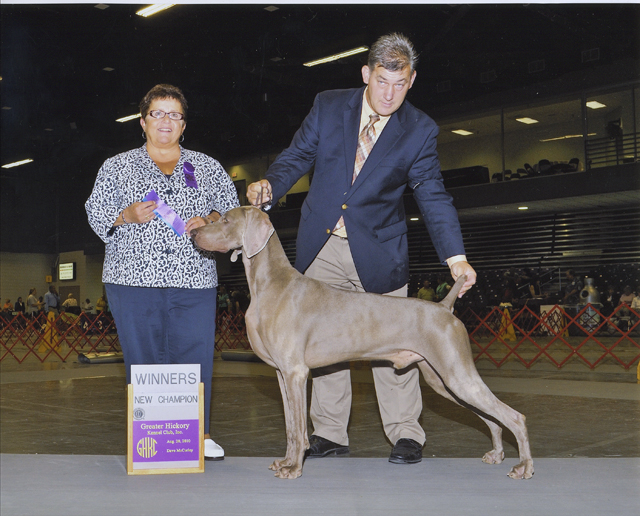
"Maverick" a rescued Weimaraner, to participate in this year's Westminster Kennel Club show!
The Westminster Kennel Club Dog Show spotlights the creme de la creme of the dog world. And in a curious twist of fate, the world of canine rescue is also a hot topic of discussion at this year's show.


In one of the most heartwarming stories ever, we learn of a Weimaraner named Maverick. Maverick's owner purchased him from Craigslist a couple of years ago. Seems Maverick was in very poor condition, underweight, neglected and unhealthy. But within a few months, under the tender loving care of his new owner, Maverick began to go to dog shows....and win...and win big....and as a Grand Champion, he will now be a participant in Westminster, the most prestigious show of the year.

Maverick's owner feels that his dog was a “rescue”. Indeed, Maverick could well have ended up in a shelter or rescue had he not been sold on Craigslist. Had that happened, Maverick would almost certainly have been neutered. What a pity that would have been for the Weimaraner world.

I've often thought that the requirement to spay/neuter every rescued dog was not only unnecessary, and potentially detrimental to health, but also contributes to narrowing of breed gene pools. Canine geneticists advise us to keep as many individuals as possible in a breed's gene pool. Genetic diversity is necessary to maintain overall health, vigor, longevity, fertility and optimal immune system function. In the case of purebreds, spay/neuter of all rescues is a very unwise move that reduces genetic diversity. While of course we must be discriminating in selecting individuals for breeding, considering health and good temperament, it's also a beneficial goal to include as many individuals in breeding programs as possible to help promote diversity and avoid the pitfalls of inbreeding. Another benefit of genetic diversity is lower incidence of breed-specific genetic health problems.

Wholescale spay/neuter, along with over-use for breeding of just a few dogs deemed exceptional, dangerously narrows the gene pools of our breeds. Maverick’s story is a success story not only for him and for his owner, but for his future generations. They would never be born if the typical “rescue” ending of a routinely performed neuter had spelled the end of Maverick’s tale. Thankfully, Maverick’s genes were ultimately preserved.

Animal rights groups have convinced us that it is merciful to spay and neuter all the animals that pass through a shelter or rescue situation. They imply that breeding is a cruel fate for animals. I think they are wrong. Dogs enjoy the activity of raising their young, just as we do.


And speaking of animal rights groups and Westminster, we also learned this past week of the termination of the Pedigree “Dogs Rule” advertising/adoption campaign that has been held during the Westminster KC show for the past several years. In my case, there was an immediate visceral objection to seeing presented abused and neglected rescued dogs (very few of which were intentionally-bred purebreds) at an event of this nature. Animal rights groups do believe that purebred dog breeding is to blame for shelter intakes and they make no bones about voicing that opinion. Even the narrator of the Pedigree commercials, David Duchovny, is an “animal rights” proponent and a PETA supporter.


So, way back in 2007, I was curious about the Pedigree campaign which was jointly conducted with the American Humane Association.


I checked out the American Humane Association website, to see where they stood on issues. The page I referenced has since disappeared and the website has been streamlined, but I looked at their website and discovered that:


  • They support AR agenda legislation in various states.
  • They advocate for mandatory, pre-pubescent spay-neuter.
  • They oppose medical research using animals.
  • They promote various “freedoms” for farm animals.
  • They oppose commercial, for-profit breeding, slurring this as “puppy mills”, and state that this is inherently cruel.
  • They support “guardianship” as opposed to “ownership”.
  • They oppose any and all tail docking, ear cropping, debarking or declawing.
  • They oppose racing and coursing.
  • They support mandatory microchipping.
The AHA was surely laughing at us, because they were successful in perpetuating the image of show dogs as the source of shelter intakes. And they did it at the biggest kennel club event of the year! And the dog breeders actually CHEERED for them!


I found it curious that during the Pedigree drive and fundraiser conducted during the Westminster KC show in 2007, there was never any mention of the many breed rescue groups, run primarily by breeders and breed club volunteers. I did not pay much attention to the commercials in subsequent years, so I don’t know if breed rescue ever was mentioned.


The Pedigree commercials referred to AKC show dogs as “lucky”….saying shelter dogs are “not as lucky as the show dogs you see here”. The implication was that these show dogs are the few, the minority, that most dogs end up at shelters. Not true. A very small percentage of dogs end up at animal shelters each year….check the nationwide numbers, it is around 3-4% of owned dogs. The vast majority of dogs in the US are cared for in a responsible and humane manner, and do not end up abandoned. Sometimes, I think it is too easy to forget that, especially for those who work day-to-day in a stressful shelter or rescue setting.


It’s not a result of “luck” that the vast majority of dogs lead a good life. It is the result of plenty of hard work, effort and dedication on the part of their owners. But mostly, it's the result of our love affair with our dogs. Westminster is a quintessential display of that affection we hold for "man's best friend".


Responsible ownership and breeding is constantly under attack from AR groups. Good riddance to the Pedigree commercials at Westminster.

Remember, it was just a couple of years ago that PETA interrupted the Westminster show with their cheap shot-style protests. Maybe that is when the club decided enough was enough and to sever ties with animal rights groups:

http://time4dogs.blogspot.com/2010/02/parade-of-mutants-seen-in-westminster.html


"Rescued Weimaraner to show at Westminster":

http://www.lifewithdogs.tv/2012/02/rescued-weimaraner-to-show-at-westminster-2012/


"Pedigree replaced as Westminster sponsor":
http://yesbiscuit.wordpress.com/2012/02/10/pedigree-replaced-as-westminster-sponsor-after-24-years/

Sondag 08 Januarie 2012

"Forever" is a long, long time


"I am a Forever Dog"


There's a warm and fuzzy message! Sounds good, no? If you can't keep a dog forever, then you shouldn't own one! Just fuggedaboudit. 


This sort of black-and-white thinking, this dogmatic mentality (pardon the pun) is further evidence of why we have so many intrusive and oppressive laws proposed.
  • We say, you should spay/neuter your pets; they say, hey, let's make it the law.
  • We say, microchipping saves lives; they say, great idea! let's make it mandatory.
  • We say, to breed responsibly, you should belong to a breed club and do health testing, Hmmm, let's make it a law that ONLY those who belong to breed clubs with enforced codes of ethics can buy a breeder's permit.
  • We say, don't breed too often; they say, OK let's make a legal limit of one litter per year.
  • "Keep your numbers down and don't expect to make any money" we advise each other; they say, if you own a kennel or make money, you are a grubby puppy-miller. 
  • We say, "rescue is noble, let's help make sure our breed doesn't add to the shelter population"; they say, "Don't breed or buy while shelter dogs die" .......... "Adopt, don't shop!" Pet sales become outlawed except for rescues
  • We say, "Make sure when you get a dog it's not an impulse purchase"; they say, "A dog is forever" and forbid pet shop sales, or advertising in newspapers or via the internet. You'd better have your sales and breeding permit numbers displayed, and you'd better not transfer ownership in public.  (Oddly enough, it's OK to impulse purchase rescued animals in pet shops or at adoption fairs.)


Life changes, stuff happens. Sometimes the dog does not work out for the situation. Working dogs go where they are needed. You lose your job and maybe your home, you get sick or perhaps even die....the dog needs to be re-homed. Breeding dogs might be sold to new owners. Someone moves, a friend or relative takes their dog. A serviceman is relocated, and his dog needs a foster home, or a new home. Breeders may place their "retirees" in pet homes.


The "Forever Home" propaganda is just another crafty animal extremist method of discouraging pet ownership, and demonizing pet owners. Don't fall for it!

Vrydag 25 November 2011

The Dogs from Spain

(To the tune of "The Rain in Spain" from Lerner and Loewe's "My Fair Lady")

Ready? All together now:

The dogs from Spain come mainly in by plane.


By George she's got it! By George she's got it!

The dogs from Spain come mainly in by plane.

In Hartford, Her-e-ford and Hamp-sheer?

Hoarding hardly ever happens!

How kind of you to let me come!
Now once again, where's it insane?

On the plane, on the plane!


And where's that crazy plane?

From SPAIN. From SPAIN!

The dogs from Spain come mainly in by plane...


"Dozens of dogs rescued who have never been out of their cages! Film at 11!"

Over forty beagles have been "rescued" from a research lab in Spain, and flown to Los Angeles for adoption. The first problem with this scenario is, in order for an operation to be a "rescue", there would have to have been some sort of resistance to the confiscation of the dogs. These dogs were voluntarily handed over by the lab as they were closing down their business. 

The cost of the operation? CBS reported that in excess of $100,000 was spent to relocate these dogs. Wouldn't that money have gone a long way toward helping animals in need right here in the US? The animal shelters in Los Angeles claim to not have enough homes for the animal sourced locally. Aren't there people in Western Europe who would have been glad to adopt these cute beagles, instead of relocating them thousands of miles away?

Naturally, the news painted a gloomy picture about how mistreated the beagles were; how they had never been out of cages, how they were in poor condition. Yet when seen on the news program, the dogs appear to be in fine condition and weight, walking perfectly normally, wagging their tails, happy and friendly. Not exactly the picture of abuse and neglect. 

But yeah, we've got it. We've really got it! Rescues need plenty of cute purebred dogs to satisfy demand from their customers. And the sadder the tale of woe, the bigger the sensationalism and the quicker they move out.

http://losangeles.cbslocal.com/2011/11/24/40-beagles-rescued-from-testing-lab-in-spain-arrive-at-lax/#comment-225320

http://blog.petrelocation.com/blog/pet-relocation-company-news/beagle-freedom-project-rescuing-41-beagles-from-spain-in-need-of-foster-homes

Saterdag 20 Augustus 2011

"Eternal Home Again" Microchips


"Professional" microchip insertion at a clinic
 Microchip ID has been widely touted for use in recovery of lost pets and facilitating returns to owner. Since our pets can’t give a phone number or address when they are lost, no doubt microchips can be very advantageous. I choose to have my dogs microchipped.


However, the State of California wishes to remove that choice from us. Los Angeles already has a mandatory microchip law on the books, enacted based on promises from the “Found Animals Foundation” to provide the city with millions of dollars worth of microchips. Shelters in many areas routinely microchip animals prior to adoption. And now the legislature is advancing a bill (SB 702) which mandates microchipping of all animals released from shelters. The owner or prospective owner would have no choice in the matter.

Since the cost of the microchip will be borne by the owner, this will probably result in higher adoption/impound fees. For at least some pets, this will reduce the chances of being adopted or reclaimed.


A microchip can be a wonderful tool, but they are not without pitfalls. There have been rare instances of microchip insertion resulting in illness and death. Dogs have bled to death after insertion and suffered from infecton at the insertion site. Some have had the chip inserted improperly into muscle tissue or even the spinal canal, and there are even instances of lethal cancer formation at microchip sites. (See articles linked below). Chips can migrate in the body or fail, rendering them useless. Microchips also vary considerably by manufacturer and there is no universal scanner at this time.


Other forms of identification such as tattoos or tags can be immediately read by anyone who finds a stray dog, allowing rapid return to owner and reducing the burden on local shelters. Animal welfare groups such as AKC and OFA consider tattoos to be an acceptable form of permanent ID. Freeze branding is also an option worth considering.


Information on a microchip may not always be updated upon transfer of ownership. If there is increased reliance on microchip without another form of ID, the result may be the death of a beloved pet who could have survived with the use of a more visible form of ID.

Animals who are stolen will most likely never be scanned, rendering a microchip uselss in such situations. The thief can even have the microchip surgically removed. This is another instance where a more visible form of ID like a tattoo might be more useful than a microchip.


In regard to microchipping, the American Veterinary Medical association states on their website:

"As with almost anything, it's not a foolproof system. Although it's very rare, microchips can fail and become unable to be detected by a scanner. Problems with the scanners are also not common, but can occur. Human error, such as improper scanning technique or incomplete scanning of an animal, can also lead to failure to detect a microchip. Some of the animal-related factors that can make it difficult to detect a microchip include the following: animals that won't stay still or struggle too much while being scanned; the presence of long, matted hair at or near the microchip implantation site; and a metal collar (or a collar with a lot of metal on it). All of these can interfere with the scanning and detection of the microchip."


The AVMA further states on this same page:


"It looks like a simple-enough procedure to implant a microchip – after all, it's just like giving an injection, right? Well, yes and no. Although it looks like a simple injection, it is very important that the microchip is implanted properly. Using too much force, placing the needle too deeply, or placing it in the wrong location can not only make it difficult to detect or read the microchip in the future, but it can also cause life-threatening problems. Microchips should really be implanted under supervision by a veterinarian, because veterinarians know where the microchips should be placed, know how to place them, and know how to recognize the signs of a problem and treat one if it occurs."


Yet, in Rebecca May’s bill analysis for SB 702 from July 8, there are reassuring statements made regarding microchip safety. Ms. May asserts "The material is inert and biocompatible, thereby there is no health risk to the animal from the insertion of the microchip. Also, implanting the device is similar to that of a vaccination, resulting in minimal pain for the animal - and can be implanted by veterinary techs and other personnel."


The statement that "there is no health risk to the animal from the insertion of the microchip" is patently false. And the AVMA seems to feel that veterinarians should be there to at least supervise the insertion, in light of the complications that may occur.


Here are two documented cases of the microchip being implanted in the spinal canal. One is dated 2009 and the other case is dated 2010.


Who is responsible if the microchip is placed in the spinal canal? Will it now be the State?

Case 1:


http://www.ncbi.nlm.nih.gov/pubmed/19151873

Vet Comp Orthop Traumatol. 2009;22(1):63-5.

Surgical removal of a microchip from a puppy's spinal canal.


"A 1.6 kg, six-week-old Tibetan Terrier was admitted with a 12-hours
history of acute onset of progressive tetraparesis following insertion of
a microchip to the dorsal cervical region. Neurological examination
indicated a lesion to the Ce(1) to Ce(5) spinal cord segments.
Radiographic examination confirmed the intra-spinal location of a
microchip foreign body at the level of the second cervical vertebra.
Microchip removal was achieved following dorsal hemi-laminectomy;
significant intra-operative haemorrhage was encountered. The puppy was
ambulatory at day seven. Follow-up telephone interview 18 months
postoperatively confirmed that the patient had made a good recovery
although it had a mild residual right- sided torticollis."


Case 2:


http://www.ncbi.nlm.nih.gov/pubmed/20422127

Vet Comp Orthop Traumatol. 2010;23(3):213-7. Epub 2010 Apr 26.


Delayed spinal cord injury following microchip placement in a dog.

"A three-year-old female, entire Yorkshire Terrier dog was examined because 
it had progressive non-weight-bearing left forelimb lameness and
tetraparesis of two weeks duration. Clinical signs were first observed
following mating. Examination confirmed non-weight-bearing left forelimb
lameness and tetraparesis. Left forelimb muscle atrophy was also noticed.
Survey radiography revealed a metallic foreign body consistent with a
microchip in close proximity to the left articular facets between the
fifth and sixth cervical vertebrae. Computed tomography identified the
exact location of the foreign body encroaching on the left dorsolateral
vertebral canal, and osteolysis of the lamina of the sixth cervical
vertebra. Surgical removal of the foreign body was performed via a dorsal
approach to the caudal cervical vertebral column. Two weeks following
surgery the dog showed return of left forelimb function and resolving
tetraparesis. Microchip implantation had been performed three years
previously."

Risks from microchips are rare, but problems do occur. Microchip insertion should be a personal choice and an individual decision, based upon weighing the risk vs benefit. Such a procedure should not be mandated by the state.

For further information: 

"Implants Linked to Animal Tumors"
Todd Lewan, A.P.
September 8, 2007
http://www.washingtonpost.com/wp-dyn/content/article/2007/09/08/AR2007090800997_pf.html


"Chipped Pets Develop Fast-Growing, Lethal Tumors
http://www.antichips.com/press-releases/chipped-pets.html


The Scientific Evidence
http://www.chipmenot.org/scientificevidence.htm


Case Histories
http://www.chipmenot.org/casehistories.htm


CASPIAN Releases Microchip Cancer Report
http://www.chroniclewatch.com/2011/05/18/caspian-releases-microchip-cancer-report/

Saterdag 30 Julie 2011

The Blame Game

When a case of animal abuse comes to light, the first reaction is to point fingers. But does a judgmental attitude help or hinder the cause of animal welfare?


Animal welfare issues are increasingly at the forefront of the national news lately. Breeder raids, dogs in deplorable conditions, stray dogs, injured dogs, dogs turned in to shelters by their owners. Dogs dumped at the side of the road by the very person they trust to care for them. Such incidents of animal abuse and neglect are covered on TV or in the newspapers on a regular, ongoing basis. Pictures are often included to support the claim of neglect or abuse. Is this really the way we treat "man's best friend"?


With all this sensational reporting in the media, we may tend to develop a skewed perception of the treatment of dogs in the USA. We might forget that the vast majority of Americans love their animals and would never abuse them, at least not intentionally. We believe that animals should be treated humanely, and most of us support animal welfare.


What exactly is meant by “animal welfare”? The American Veterinary Medical Association states on their website: “Ensuring animal welfare is a human responsibility that includes consideration for all aspects of animal well-being, including proper housing, management, nutrition, disease prevention and treatment, responsible care, humane handling, and, when necessary, humane euthanasia.”


Concerns for animal welfare have promoted a general awareness of the need for proactive rescue efforts in order to prevent shelter deaths. The public has rallied to the cry to seek out their next pet from a shelter or rescue, to the tune of about four million animals "adopted" each and every year.


Sometimes in the zeal to promote animal welfare, animal advocates may cross into the territory of the Animal Rights philosophy. As society has become more urbanized and we have less contact with our agricultural roots, people may begin to confuse animal welfare with animal rights. It is important to distinguish between the two.


Animal rights is a philosophy that animals have rights similar to or the same as humans. True animal rights advocates believe that humans do not have the right to "use" animals in any capacity. They would prohibit raising of animals to produce meat, leather, wool, feathers, fur, eggs, milk and honey. The would also ban hunting, fishing, rodeos, horse racing, circuses, life-saving medical research using animals, petting zoos, marine parks, breeding of pets, use of dogs for police work, hunting, herding, as well as “seeing eye” and other therapy dogs. In short, any use of animals for industry, entertainment, sport, recreation or companionship would be banned under the animal rights philosophy.


Prominent animal rights groups include PETA (People for the Ethical Treatment of Animals) HSUS (Humane Society of the United States), IDA (In defense of Animals), SHAC (Stop Huntington Animal Cruelty) and Mercy for Animals. These so-called “animal rights” groups have a definite, well-planned agenda in raising the issue of perceived animal abuse in the media. The "AR" groups wish to promote excessive regulatory legislation under the guise of controlling animal abuse. The animal rightists’ goal is to make animal ownership incrementally more expensive and inconvenient. In so doing, they will achieve an overall decline in animal ownership in society.


PETA claims on their internet homepage, “Animals are not ours to eat, wear, use for entertainment…” However, the animal rights hypocrites at PETA do not have any genuine concern about animal welfare. PETA manages to kill thousands of defenseless pets every year at their Virginia headquarters. Since 1998, PETA has killed 25,840 adoptable dogs, cats, puppies, and kittens instead of finding them homes. In contrast, other shelters in the area save the majority of their intakes. PETA employees admitted picking up puppies and kittens from local veterinarians' offices, supposedly to "help" get them new homes. Instead, they killed them in the van and then dumped the bodies. They never even made it out of PETA's van! This horrific activity went on for months. These PETA employees were subsequently convicted of "littering" dead animals in various dumpsters in their area.


HSUS is governed by a similar twisted animal rights extremist philosophy. Miyun Park, HSUS Vice President from 2005-2009, said at an animal rights conference in 2006: “We don’t want any of these animals to be raised and killed [for food]…unfortunately we don’t have the luxury of waiting until we have the opportunity to get rid of the entire industry. And so because of that….we work on promoting veganism.”


The official “Animal Rights Agenda” was drafted in 1987 and included in the Green Party platform, and was also published in ‘Animals Agenda’ magazine. The “Agenda” includes this statement of policy:


We strongly discourage any further breeding of companion animals, including pedigreed or purebred dogs and cats. Spay and neuter clinics should be subsidized by state and municipal governments. Commerce in domestic and exotic animals for the pet trade should be abolished.


The animal rights groups are well-funded, well-organized and well-staffed, and they utilize effective methods to shape public opinion. These methods include intimidation, such as boycotts of pet stores and furriers, aggressive media rhetoric campaigns. At times they resort to outright terrorism such as physical attacks on scientific researchers, and highly-publicized (though invariably illegal) raids on breeders, in order to achieve their goals.


The Animal Rightists (or perhaps they should be called "Animal Wrongists”?) have become experts in twisting public opinion on animal issues, including dog breeding and selling. Such activities are now widely regarded in an unfavorable light by the general public.


But it isn't just the animal rights groups who sling arrows at those with animal interests. Dog hobbyists, pet owners, rescue leaders, and members of the public are often among the most vocal critics of perceived animal abuse. When dogs are given up, it's not uncommon for rescue personnel to criticize those who relinquish their dogs, and snicker at their reasons as "lame excuses". In reality, the purpose of shelter and rescue in our society is not to point fingers with disdain at the public, it is to find homes for adoptable dogs. Neither a condescending attitude nor playing the blame game will help animals find homes.


Nathan Winograd, an shelter expert who is pioneering No-Kill sheltering methods in this country, believes that the focus should be on positive programs that save lives. He has demonstrated in community after community that changing attitudes can dramatically reverse the killing tide and help to solve the challenges of pet homelessness. Dwelling on the reasons that pets are relinquished does nothing to solve these problems. We should encourage more families to adopt pets rather than place roadblocks on the path to adoption.

Innovative social programs are the keys to success. Such methods as foster care, extended shelter hours, promoting outside adoptions, and behavior rehabilitation programs have been used very successfully in many areas where they have made the commitment to implement no-kill sheltering. Blaming the bogeyman of "irresponsible owners" is a waste of useful time and energy, and has no place in a successful shelter program.


When we blame the public for animal sheltering problems, we fall into a similar mindset as that which is used by the sheltering industry when they kill animals. "If only people were more responsible, these animals would not have to be killed" is a common reasoning held among shelter workers. Indeed, this attitude is one that animal shelter personnel share with the animal rights groups. Animal rights groups such as PETA and HSUS further believe that "killing is kindness" to quote PETA's president Ingrid Newkirk. And kill they do, all the while blaming the irresponsible public. The HSUS even offers seminars for animal control departments in which they urge that animals in shelters be killed as soon as any mandatory holding period expires. Playing up the "irresponsibility" of the general public makes a great excuse to continue to kill thousands of animals, and to raise more obstacles to pet ownership.


And, many of the reasons for pet relinquishment are not due to irresponsibility, but are the result of legitimate social problems. There have been studies done on the "official" reasons that pets are relinquished to shelter or rescue. The reality of life today is forged by economics. The #1 reason for pet relinquishment is cited as “moving.” High rates of unemployment and home foreclosure contribute to this phenomenon. Unfortunately, financial problems may mean that some pets must be re-homed out of necessity. Pets may also find themselves in need of shelter or rescue due to other unforeseen circumstances such as sudden death or incapacity of the owner.


Behavioral problems are rarely cited as a reason for relinquishment, but issues such as excessive barking, difficulty with housebreaking, destructiveness, and incompatibility with children are common reasons for the honeymoon with a pet to end. When people are confronted with a behavior problem that they can't solve, what happens? Many times the dog is given up....or maybe even taken to a distant location and dumped out of frustration on the part of the owner.


To help get pets into the most compatible homes and keep them there, animal welfarists know that public education and support programs are critical. Most individual breeders and breed rescue groups provide educational information about the requirements of their particular breed and are able to advise would-be owners on whether the breed or individual dog in question would be a good match for their particular situation. A good breeder can also serve as an invaluable resource person who the pet buyer can turn to when they have questions or problems.


When adopting a shelter or rescue dog of unknown parentage and background, advice and support may also sometimes be needed and there are limited resources for such help. The California Federation of Dog Clubs has recently developed a brochure with training tips including basic obedience, housebreaking and leash training. We also have established a 1-800 help line for people to call if they have questions or problems with their dog. This brochure is now being distributed to all the shelters in our state, so that new owners can have a resource and reference when they adopt a new dog. This is another example of proactive methods employed by animal welfare advocates.


Let’s try to solve the problems involved with re-homing dogs without looking to find fault and blame in the situation. Such attitudes are nonproductive and can in fact be used as part of the propaganda to further the anti-ownership, pro-killing agenda of the animal rights movement.

Dinsdag 26 Julie 2011

Do Pet Store Dogs Fill Shelters?


I've long suspected that people who pay a pretty penny for their pet are not likely to allow it to end up in an animal shelter. And, it turns out, there is a study that confirms this theory. A Las Vegas shelter collects data on their intakes. Here is an excerpt from an article written on the subject:

'Officials should focus on finding the origin of the animals that rescue groups, shelters and animal control agencies come in contact with, said Harold Vosko, co-founder of Las Vegas-based Heaven Can Wait Animal Sanctuary. Without accurate information on the source of the crisis, addressing it is impossible, he said.'

'Statistics collected over the past two years at Heaven Can Wait showed more than 85 percent of the animals came from a neighbor or friend’s litter, Vosko said. Fewer than 5 percent were from pet stores and no more than 1 percent or 2 percent were from professional breeders.'

Wow. Pretty sobering statistics.

'The Lied Animal Foundation, which operates the regional shelter, recently started asking people how they obtained their pets, said Jason Smith, who took over as director of operations about six weeks ago. The data will help Lied shape how it educates the community about responsible pet ownership.'

Wonderful! Actual problem-solving in action!

And, there are further thoughtful comments about mandated spay and neuter:

'The AKC has no problem with spaying and neutering pets, Sondej said, the concern is requiring it by a certain age. Some breeds are still growing into their second year, and early sterilization can lead to adverse physical effects, he said.'

'Michael Maddox, director of legislative affairs for the Pet Industry Joint Advisory Council in Washington, D.C., said requiring animals to be sterilized before sale isn’t reasonable or in the animal’s best interest. Nor does it address the underlying problem. The “overwhelming majority” of pets in shelters come from sources other than pet stores, Maddox said.'

Good to know that there are some people out there who are interested enough to investigate and find out the truth about owner-surrendered animals and where they originate.

http://www.lasvegassun.com/news/2009/apr/06/animal-breeders-activists-clash-over-bills/

Here's another study. 3.9% of the shelter intakes originated at pet stores. Check out Table 2.

http://www.petpopulation.org/characteristicsofshelter.pdf

But then, that's not surprising, is it? Pet store puppies are just a small percentage of the market in the US.

Donderdag 30 Junie 2011

Mother Dog and Nine Puppies sent from Taiwan to LA


On June 2, one animal rescue group was on hand to welcome a special shipment they had arranged to arrive at Los Angeles International Airport.  Nine puppies and their mother landed in a plane from Taiwan.  The young family had been trapped in a drainage ditch and nearly lost their lives.
The rate of abuse to dogs in Taiwan is rampant and beyond rational understanding.  It is commonplace for dogs to be tortured with hot oil on their faces and backs or to be caught in metal traps and left to bleed to death.  And like the dogs that arrived at LAX, many are dropped into deep ditches so they cannot get out and eventually die of starvation.
So when A Dog’s Life Rescue (ADLR) was contacted by Animal Rescue Team TAIWAN, they knew they couldn’t turn the four-legged family away.  The group quickly made all the necessary arrangements to put the dogs on a plane the next day.
More at link:

Rescue Roulette


A stolen dog, the microchip sliced out of him; a "rescuer" who is definitely up to something fishy. And no questions, no accountability? Hi Hola!
Good lord! Another edition of "Rescues Gone Wild"!
‎Why did Brenda Barnette not demand an immediate investigation of the L.A. rescue group removing the microchip of a shelter animal (or any animal) before transporting it? AND what happens to shelter animals when they are transported into an area with plenty of dogs already looking for homes?.
There is no required accounting for the dogs after they leave Los Angeles, just lots of PR rhetoric on how each one finds a home. It has been reported that some don't arrive alive.  If they do, do they stay alive?
http://www.opposingviews.com/

This is the story of Dexter, a non-descript German Shepherd/Chow-mix, 50-lb. dog, like thousands in shelters across the country.? In February 2011, Dexter was scheduled
__._,_.___
Aangedryf deur Blogger.

Labels