Wys tans plasings met die etiket Protect Your Dog's Immune System. Wys alle plasings

Dinsdag 08 Januarie 2013

Lemon – A Safe, Natural Misquito Repellent for Dogs


Unfortunately most commercially produced products (oral and topical preventatives) - designed to repel Mosquitos from your dog contain powerful chemical-based pesticides and other toxic / carcinogenic ingredients that are very harmful to your dog’s well being.

If you are in a zone in which you must use heartworm pills I suggest that you off-set the harmful side effects of heartworm pills by introducing foods into your dog’s diet that will help protect against the toxins and carcinogens found in heartworm pills. See 3.0 further below for more on using diet to offset the harmful ingredients in heartworm pills.

If you are notin a high-incident zone (such as New Orleans, or Florida) for heartworm infection you can try using the following lemon-based alternatives to repeal misquitos and subsequently the infestation of heartworms…

As an alternative you can use fresh lemon to discourage misquitos from ‘visiting’ your dog. Even better, use organic fresh lemons!


Use Lemon in Two Ways to Help Repel Misquitos…

One - Topical Application;
Two - Ingested as part of your dog’s daily diet.

Read on below to find out how lemon can be your dog’s best friend…

1.0 Topical Applications

Lemon when applied topically can be used to repel insects and parasites.
Mosquitos do not like the scent of citrus…

 
1.1 Spot Treatment
  • Cut a fresh lemon, (lime, orange, or grapefruit) in half and rub the cut fruit onto your dog’s fur.
  • Avoid the area immediately around your dog’s eyes and do not apply to open wounds/cuts - citrus stings!
  • Make sure you pay special attention to favourite/vulnerable spots like ears, nose, under the tail and tummy.
  • Lemon is non-toxic to dogs so, unlike most commercially manufactured misquote repellents – your dog will not be harmed by licking/ingesting the lemon juice!

1.2 Spray Application

What you will need…
  • 6 lemons, or you can use a mix of citrus
  • 1 quart of water (.95 litre)
  • 1 pot
  • 1 spray bottle
Preparation
  • Cut the lemons and/or other citrus fruit in half;
  • Place the cut fruit and 1 quart of water in a pot;
  • Bring to a boil and then allow too steep for two hours;
  • Allow the resulting liquid to cool;
  • Once cool, strain the liquid to remove any pulp;
  • Pour the resulting liquid into a spray bottle;
  • Spritz your dog’s fur - remember to protect your dog’s eye from the spray;
  • To apply the spray to your dog’s face:
  • Spray the palm of your hand with the solution;
  • Rub your hands gently over your dog’s nose, around their eyes, behind the ears, around the base of the tail, under your dog’s legs, etc.
  • If your dog is going to be outside for a good portion of the day - repeat the spray application every 2 to 3 hours.

1.3 Mosquito Repelling Collar Drops
You can put a few drops of lemon-oil or 1 drop of essential lemon-oil on your dog’s collar to further discourage misquotes.

To make your own lemon-oil…
You will need…
  • 2 lemons,
  • 1 cup olive oil
Preparation
  • Peel the rind from the lemons;
  • Place oil and lemon rinds in a sauce pan;
  • Place on very low heat for 20 minutes;
  • Allow to cool;
  • Strain and pour into a bottle.

2.0 Ingested Treatment
 
Adding fresh lemon to your dog’s daily diet is simple…


I use a food processor to finely chop/mince fresh lemon.
  • I sprinkle the finely minced lemon on top of my dog’s food once a day.
  • Then store any remaining minced lemon in an air tight glass container (in the refrigerator) for a day or two. 
Dosage...
  • 1 tsp/day of minced lemon for small dogs;
  • 2 tsp/day for medium size dogs, and;
  • 3 to 4 tsp/day for large dogs.
If you would like to know more about the health benefits of lemon for your dog – the benefits are numerous...you can read more here ᵔᴥᵔ

3.0 If You Must Give Your Dog Heartworm Pills…

I recommend that you expand your dog’s diet to help off-set the damage that the toxins and carcinogens in heartworm pills can reek on your dog’s long-term health. Include some simple, natural foodstuffs in your dog’s diet that boosts this/her immune system, detoxifies the body and protects against cancer…


The following foods can be added to your dog’s daily diet – simply top-off your dog’s existing food (kibble, raw-food, or home-made cooked food) with the following once a day…
  • Apple Cider Vinegar (ACV) – organic, unpasteurized
    • Small size dogs - 1 tsp
      Medium size dogs – 1tbs
    • Large dogs – 1.5 to 2 tbs
  • Cranberries - fresh/frozen finely chopped cranberries (no sugar added)
    • Small size dogs - 1 tbs
      Medium size dogs – 1.5 to 2 tbs tbs
    • Large dogs – 2 to 3 tbs
  • Coconut Oil – read more about coconut oil here – benefits, dosage
  • Garlic - fresh, chopped – read more about garlic here.
    • Dosage for Garlic...
    • 1 clove/1 tsp chopped garlic per every 30 lbs of body weight;
  • Lemon - fresh, finely chopped
    • Small size dogs - 1 tsp
    • Medium size dogs - 1 tbs
    • Large dogs - 1.5 to 2 tbs
  • Kefir – read more about kefir (and/or sauerkraut) and how to introduce it to your dog’s diet here. Kefir is a powerful probiotic and should be introduced in small amounts, building up to the full dosage…
    Dosage for kefir:
    • Small size dogs - 1 tsp
    • Medium size dogs - 1 tbs
    • Large dogs - 11/2 to 2 tbs
  • Omega Fatty Acids – make sure your dog is getting the right balance of Omega fatty acids – I have yet to see a commercially made dog food that has the Omega 3:6 Fatty acids properly balanced. You will need to add some good-source Omega 3 fatty acids to your dog’s diet – read more hereand choose the Omega 3 you want to use.
  • Turmeric – read more about turmeric here- benefits, dosage

For items such as cranberries, garlic and lemon…
  • I chop (the finer the better) enough of the foodstuff in the food processor to last several days to a week;
  • Then I put the chopped food in containers - plastic (BPA free) or glass;
  • I leave the appropriate sized measuring spoon in the container – this little convenience makes it faster to prepare the meal at feeding time ᵔᴥᵔ
 For more information on conventional heart worm preventatives, risks, zones and alternative interventions you can click here


      Vrydag 06 Julie 2012

      DIY Recipes for Safe, Natural, Herbal, Homeopathic Shampoos and Rinses for Dogs


      Despite the fact that a manufacturer may label and advertise a shampoo for dogs as safe, all-natural or organic does not mean that the product is actually safe, organic or natural. While a product may contain one or more safe ingredients it may also include multiple toxic/carcinogenic ingredients.

      Unless you are 100% sure of the quality of the product you are better off making your own dog shampoo - it is simple and easy to make. Here are some recipes…but first please note, as with any shampoo make sure to keep the soap out of your dog’s eyes!

      Shampoo Recipes

      Simple Shampoo
      3 oz    Castile soap (available at many health and bulk food stores);
      2 oz    Apple Cider Vinegar (organic is best)
      1 oz    Vegetable Glycerin
      2 oz    Distilled water 


      Citrus Scented Shampoo
      3 oz    Castile soap (available at many health and bulk food stores);
      2 oz    Apple Cider Vinegar (organic is best)
      1 oz    Vegetable Glycerin
      2 oz    Distilled water
      5 drops Orange essential oil
      3 drops Lemon essential oil


      Cinnamon and Rosemary Scented Shampoo
      3 oz    Castile soap (available at many health and bulk food stores);
      2 oz    Apple Cider Vinegar (organic is best)
      1 oz    Vegetable Glycerin
      2 oz    Distilled water
      6 drops Cinnamon essential oil
      5 drops Rosemary essential oil


      Flower Scented Shampoo
      3 oz    Castile soap (available at many health and bulk food stores);
      2 oz    Apple Cider Vinegar (organic is best)
      1 oz    Vegetable Glycerin
      2 oz    Distilled water
      5 drops Rose essential oil
      4 drops  Lavender essential oil
      3 drops Ylang Ylang  essential oil


      If you would like to follow your dog’s shampoo with a soothing rinse treatment, you can select from one of these herbal rinses…

      Rinse Recipes

      Herbal Rinse #1 - Anti-Itch Herbal Rinse, very good for dogs with Chronic Skin Allergies

      You will need the following:
      2 tea bags of Rooibos Tea (also known as Red Bush Tea);
      Fresh squeezed juice of one lemon.
      • Place the tea bags and lemon juice in hot water and allow to steep for 15 minutes;
      • Remove the tea bags and allow the resulting ‘tea’ to cool;
      • Then use the tea as a conditioning, soothing rinse…you do not have to rinse the ‘tea’ off of your dog after application. Don’t use rooibos tea rinse on white fur dogs unless you add the optional ingredient - lemon juice. Rooibos tea is red, but when fresh lemon juice is added the intense red is softened to light yellow, and will not affect white fur.
      Rooibos is naturally anti-viral, anti-allergenic and a mild anti-anxiety mediator. Rooibos tea is also high in vitamin C, rich in antioxidants (37 to be exact), several minerals and alpha-hydroxy-acid. If you would like to know more about the health benefits and uses of Rooibos tea for your dog you can read this article. Lemon has many health benefits for dogs - read more here.


      Herbal Rinse #2 - Soothing Chamomile and Green Tea
       
      You will need the following:
      2 Chamomile tea bags
      1 green tea bag
      • Place the tea bags in hot water and allow to steep for 15 minutes;
      • Remove the tea bags and allow the resulting ‘tea’ to cool;
      • Then use the tea as a conditioning, soothing rinse…you do not have to rinse the ‘tea’ off of your dog after application.


      Herbal Rinse #3 - Refreshing Lemon Balm
       
      You will need the following:
      2 Lemon balm tea bags
      1 green tea bag
      • Place the tea bags in hot water and allow to steep for 15 minutes;
      • Remove the tea bags and allow the resulting ‘tea’ to cool;
      • Then use the tea as a conditioning, soothing rinse…you do not have to rinse the ‘tea’ off of your dog after application…don’t use lemon balm tea rinse on white fur dogs as it may give their coat a slight yellow tinge.

      Herbal Rinse #4 - Refreshing Peppermint, Fennel and Rose
       
      You will need the following:
      1 peppermint tea bag
      1 fennel tea bag
      1 rose tea bag
      • Place the tea bags in hot water and allow to steep for 15 minutes;
      • Remove the tea bags and allow the resulting ‘tea’ to cool;
      • Then use the tea as a conditioning, soothing rinse…you do not have to rinse the ‘tea’ off of your dog after application…don’t use lemon balm tea rinse on white fur dogs as it may give their coat a slight yellow tinge.

      Herbal Rinse #5 - Soothing ‘Mix-it-Up’ Herbal Rinse 
       
      You will need 1 oz of each of the following dry herbs:
      Calendula
      Chamomile
      Lavender
      Oats
      Rose Petals
      Slippery Elm
      Witch Hazel
      • Grind the herbs in a mortar and pestle or coffee grinder;
      • Place the ground herbs in a large loose tea bag/ball, or muslin; 
      • Place in hot water and allow to steep for 15 minutes;
      • Remove the tea bag/ball and allow the resulting ‘tea’ to cool;
      • Then use the tea as a conditioning, soothing rinse…you do not have to rinse the ‘tea’ off of your dog after application.

      Woensdag 09 Mei 2012

      Dental Care for Dogs - Natural, Herbal, Homeopathic DIY Remedies, Treatments


      There are many natural, herbal and homeopathic interventions and treatments that you can adopt to improve and maintain your dog’s oral health.

      If your dog already has gingivitis or periodontal disease it is best to have the built-up plaque and tartar removed, and then start a regular maintenance regimen. Fragaria Vesca can be used to soften the tartar/plaque - you will find instructions on the use of Fragaria below along with many options for simple, affective natural, herbal, homeopathic oral health care, including…
      • Toothpaste;
      • Gum treatments;
      • Oral rinse;
      • Treatment/remedies for bleeding gums;
      • Treatment/remedies for killing bacteria.
      • Foods & herbs that fight oral bacteria and reduce plaque.

      A dog that has infected teeth and gums can become weak as they do not wish to eat due to pain. You will see below that there are many herbal tinctures that you can choose from to treat the pain caused by infected teeth and gums so that your dog will be interested in eating again. These same tinctures also work to fight bacteria which causes infection while reducing inflammation and bleeding.

      Baking Soda (Bicarbonate of Soda)


      Toothpaste - Baking Soda
      • Dampen a tooth brush with a little warm water;
      • Dip the brush in baking soda (just a little soda is required - do not load the brush with soda);
      • Gently brush your dog’s teeth - baking soda is an abrasive so do not apply pressure when brushing.
      Toothpaste - Baking Soda & Cinnamon
      • In a glass combine 1 tsp of baking soda with 1/8 tsp of cinnamon;
      • Mix the soda and cinnamon;
      • Dampen a tooth brush with a little warm water;
      • Dip the brush in the cinnamon/baking soda powder mix (just a little is required - do not load the brush with soda);
      • Gently brush your dog’s teeth - baking soda is an abrasive so do not apply pressure when brushing.
      For more information on cinnamon (benefits, dosage) see the section on ‘Cinnamon, Kefir and Manuka Honey’ below. Do not give cinnamon to a pregnant dog.

      The amount of baking soda required to clean your dog’s teeth is very small - you do not need to laden the brush - a little is affective. If ingested in large amounts baking soda is not good for your dog. Ingesting a large amount of baking soda can cause problems with electrolyte levels (low calcium, low potassium, high sodium), muscle spasms and/or congestive heart failure.

      Benefits of Baking Soda
      Baking Soda is derived from a naturally occurring mineral called natron, which was first mined by the ancient Egyptians. I. the 1800’s to bakers from France created the modern version of Baking Soda. It is a mild abrasive and has been used for medicinal purposes for centuries.

      Calendula (also known as Pot Marigold)


      Treatment for Bleeding Gums  Use a cotton swab to generously apply tincture of Calendula on inflamed gums.

      Benefits of Calendula 
      Calendula has been used in herbal preparations for thousands of years. Calendula is excellent for promoting the healing of wounds and stopping bleeding. It has antiviral, anti-genotoxic, anti-tumour, anti-inflammatory and antibacterial properties. Calendula promotes the metabolism of proteins and collagen which is necessary to grow new healthy cells and tissue. Calendula is safe for dogs, including pregnant dogs.

      Cinnamon, Kefir and Manuka Honey

      You may be surprised to see honey listed as an ingredient for use in oral care, but manuka honey has very special properties (as noted below), unlike most sweeteners -  which are very bad for your dog’s teeth and general health.


      Sprinkle Cinnamon on Food
      Dogs love the taste of cinnamon so ground cinnamon can be sprinkled on top of your dog’s kibble or other food. Cinnamon helps dissolve food particles and aids with the digestion of food. Daily maximum dosages for cinnamon are provided below.

      Oral Rinse – Cinnamon and Warm Water
      • In a glass, mix about 2 tbs of warm water with 1/8 tsp of cinnamon powder. Make sure the cinnamon is completely mixed with the water;
      • Use an eye dropper or medicine dispensing syringe to squirt the liquid into your dog’s mouth;
      • Have a towel ready and keep it under your dog’s chin as the liquid will dribble back out of your dog’s mouth;
      • Follow-up by squirting some plain water into your dog’s mouth…or they may choose to have a drink of water on their own.
      You can use this remedy on yourself as well - it is as good if not better than any commercial mouthwash…and unlike many of the big name products, it is not tested on animals and does not contain any toxins.

      Toothaches, Infected, Bleeding Gums – Cinnamon and Manuka Honey
      To relieve your dog’s discomfort…make a paste of:
      • 1 tsp Cinnamon Powder;
      • 5 tsps Manuka Honey.
      • Apply the paste to the aching tooth. You may apply this paste up to 3 times per day until the pain is arrested. 
      You can use this remedy on yourself as well! Daily maximum cinnamon dosage for dogs is provided below.

      Toothpaste – Cinnamon, Kefir and Manuka Honey
      In a glass mix kefir, with manuka honey and a little cinnamon - the consistency should be that of a paste. Use this paste to brush your dog’s teeth. They will love the taste!

      Benefits of Cinnamon, Kefir and Manuka Honey

      Cinnamon
      Cinnamon has quite an extensive list of beneficial properties for oral care…it is an:
      • Anti-inflammatory;
      • Anti-microbial (fights bacteria, fungi, etc.)
      • Anti-septic;
      • Mild anesthetic;
      • Helps dissolve food particles and aids in the digestion of food.

      Historically cinnamon has been used to numb teeth and gums, including the gums of teething infants.

      Maximum dosage of Cinnamon per Day
      • Large Dogs - ½ tsp a day;
      • Medium Dogs - ¼ tsp a day;
      • Small Dogs - 1/8 tsp a day.
      Cautions: In some very rare cases cinnamon can be an irritant. All of my ten dogs (small, medium, large breeds) have cinnamon on a daily basis and have never experienced any reaction. Cinnamon powder in the doses mentioned above is safe for pregnant dogs, but do not use cinnamon essential oil on a pregnant dog.

      Kefir
      Kefir is a creamy, dairy based food made from the milk of cows, goats and sheep, sometimes also made from coconut milk, rice and soy. (Do not purchase kefir made from soy if you live in North America as almost all soy crops are from genetically modified seeds). Kefir contains a large amount of phosphorus and B Complex vitamins (important for maintenance of healthy teeth), it promotes the faster healing of wounds, illness, it is excellent for the immune system, and a rich source of good bacteria - these are just a few of its health benefits.
       
      Manuka Honey
      Manuka Honey is produced by bees that fed on a native tree of New Zealand. Manuka honey has been used for its great healing properties for centuries. Manuka Honey is well known for its antibacterial, antifungal, antiseptic properties. It speeds up the healing process by stimulating wound tissues; initiates the healing process in dormant wounds; is an autolytic debridement (helps remove damaged, dead, infected tissue) and is an excellent moist wound healing agent. 

      Echinacea

      Echinacea has anti-inflammatory, antibiotic and analgesic properties. Echinacea has been used in oral care for hundreds of years, popular as a mouthwash, it aids in the fight against gingivitis and periodontal disease by supporting immunity to bacterial infections that help destroy germs and minor infections in the gums. Its analgesic properties soothe aching guns and teeth. Echinacea is safe for use with pregnant dogs.


      Treat Infected Teeth and Infected, Bleeding Gums
      Use a cotton swab to generously apply tincture of Echinacea directly your dog’s gums.

      Mouthwash
      • In a glass, mix ½ tsp dried Echinacea root powder with 1 cup of water in a microwavable glass bowl or cup;
      • Microwave for three minutes;
      • Remove from microwave and cover bowl or cup with plastic wrap or other cover;
      • Allow the liquid to sit and cool for an hour;
      • After an hour, strain the liquid;
      • Use an eye dropper or medicine dispensing syringe to squirt the liquid into your dog’s mouth.
      • Have a towel ready and keep it under your dog’s chin as the liquid will dribble back out of your dog’s mouth;
      • Follow-up by squirting some plain water into your dog’s mouth…or they may choose to have a drink of water on their own.
      You can use this remedy on yourself as well - it is as good if not better than any commercial mouthwash…and unlike many of the big name products, it is not tested on animals and does not contain any toxins.

      Fragaria Vesca (Fragaria 6x, Woodland Strawberry)

      Fragaria Vesca is used for softening and removing tartar and plaque. Once softened normal use of a toothbrush is more affective and can be used to affectively help keep teeth clean. Continued use of Fragaria Vesca helps keep tartar and plaque from reforming on teeth. Fragaria Vesca is safe for use on pregnant dogs.


      Toothpaste and Tartar/Plaque Softener
      • Place 3 Fragaria pellets in ¼ cup of warm water;
      • Allow the pellets to soak in the water for 5 minutes;
      • After 5 minutes remove the pellets from the water;
      • Use the resulting fragaria water to brush your dog’s teeth and gums

      Goldenseal, Myrrh and Oregon Grape


      Skip the Toothpaste, use Regular Gum Treatments - Oregon Grape, Myrrh, Goldenseal
      You can use this treatment several times a week as part of an ongoing oral care maintenance program. Using a cotton swab, generously apply tincture of Oregon Grape, Myrrh or Goldenseal to your dog’s gums. This will inhibit the growth of bacteria that causes plaque and tartar. In addition to being antiseptic, Goldenseal, Myrrh and Oregon grape also stimulate new tissue growth of the gums.

      Toothaches, Infected, Bleeding Gums – Oregon Grape, Myrrh, Goldenseal
      For infected teeth or gums - use a cotton swab, generously apply tincture of Oregon Grape, Myrrh or Goldenseal on inflamed gums reduces painful swelling and works to stop more serious infection from setting-in.

      Mouthwash - Goldenseal
      • In a glass, mix 1/2 tsp. goldenseal root powder with 1 cup of water in a microwavable glass bowl or cup;
      • Microwave for three minutes;
      • Remove from microwave and cover bowl or cup with plastic wrap or other cover;
      • Allow the liquid to sit and cool for an hour;
      • After an hour, strain the liquid;
      • Use an eye dropper or medicine dispensing syringe to squirt the liquid into your dog’s mouth.
      • Have a towel ready and keep it under your dog’s chin as the liquid will dribble back out of your dog’s mouth;
      • Follow-up by squirting some plain water into your dog’s mouth…or they may choose to have a drink of water on their own.
      You can use this remedy on yourself as well - it is as good if not better than any commercial mouthwash…and unlike many of the big name products, it is not tested on animals and does not contain any toxins.

      Benefits of Goldenseal, Myrhh and Oregon Grape

      Goldenseal
      Goldenseal has been used for centuries by Native Americans and is a widely used herb today. Goldenseal has anti-inflammatory, amoebocide and antiseptic properties. Do not use on
      pregnant or nursing dogs.


      Myrhh
      Myrhh is a natural dental care product with antibiotic, astringent, amoebocide and anti-inflammatory properties. Historically it has been used for many centuries to treat swollen gums, mouth ulcers, etc. Myrhh is safe for pregnant dogs when used in small amounts.


      Oregon Grape (also called holly-leaved barberry, mountain grape)
      Although grapes and raisins are very bad for dogs, the tincture of Oregon Grape is non-toxic to dogs, provided it is used in moderation - large quantities are not necessary. Oregon grape is a natural antibiotic, astringent, amoebocide and anti-inflammatory. Do not use Oregon Grape tincture on pregnant dogs.


      Vitamin C


      A deficiency of vitamin C in the diet has been proven to lead to gingivitis, periodontal disease and a reduction in the body’s ability to fight infection. Clinical research has shown that vitamin C improves host defence mechanisms thus supporting periodontal health and boosting the immune system. Vitamin C is required for the development of collagen - a substance that gives cell tissue strength and elasticity. Gums are fragile by nature so supporting healthy collagen production is all the more important. Vitamin C is safe for pregnant dogs.

      Toothpaste
      • Mix one cup of warm water with ½ tsp of powdered vitamin C (or grind-up vitamin C tablets to create a powder;
      • Use the resulting liquid to brush your dog’s teeth.


      Foods & Herbs that Fight Oral Bacteria and Reduce Plaque


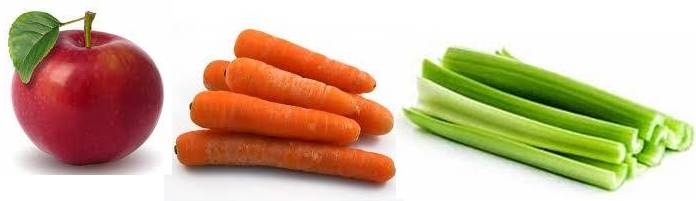
      Apples, Carrots, Celery
      Dogs love the taste of apples…chewing on fresh, crisp apples helps remove bacteria and food particles from teeth. Just wash the apple, remove the apple core (the seeds contain arsenic which is poisonous to dogs), slice the apple-up and let your dog enjoy. Carrots and celery are also healthy choices offering the same bacteria removing action as apples. These foods also increase saliva production which helps to wash away bacteria and plaque.


      Citrus Fruits, Melons and Berries
      Citrus fruit such as clementines, grapefruit, lemons, oranges, tangerines; melons and berries such as blackberry, cranberry, gooseberry, raspberry and strawberry all contain high levels of vitamin C. A diet that is rich in vitamin C creates an environment in which bacteria does not thrive. These foods also increase saliva production which helps to wash away bacteria and plaque. The other benefits of vitamin C are listed in the section on Vitamin C above.Lemons have many other health benefits as well - you can learn more about the benefits of lemons here.


      Herbs
      Corriander (cilantro), Mint and Spearmint have germicidal properties that inhibit the growth of bacteria in the mouth. You can add these fresh herbs to your dog’s food or combine with some sliced apple, etc. Just finely chop the fresh herb - you can also sprinkle a little olive oil or salmon oil on the herbs.

      Daily amount…
      • Large size dogs 3 - tbs a day;
      • Medium size dogs - 2 tbs a day;
      • Small dogs - 1 tbs a day.

      Yogurt
      Adding a little yogurt with active cultures to your dog’s daily diet reduces the odor- causing hydrogen sulfide in your dog’s mouth and helps destroy bacteria that causes plaque and tartar. A diet rich in Vitamin D (yogurt and cheese are both high in vitamin D) creates an inhospitable environment for bacteria. Make sure you give your dog plain yogurt with active cultures, not highly processed yogurt with sugar or artificial sweeteners. I usually give my dogs 2% plain yogurt. You can add fresh fruit to the yogurt, top it with a little cinnamon and give it to your dog as a treat on its own or add it to their kibble etc.

      Daily amount…
      • Large size dogs 3 - tbs a day;
      • Medium size dogs - 2 tbs a day;
      • Small dogs - 1 tbs a day.

      Related Articles


      Aangedryf deur Blogger.

      Labels