Maandag 13 Februarie 2012

HERBS AND SPICES FOR YOUR DOG'S HEALTH


Humans have used herbs and spices to add flavour to their food and to treat ailments for thousands of years. So, it should not be surprising that there are many herbs and spices that are good for dogs. Holistic medicine for dogs includes the use of herbs and spices to treat and ameliorate ailments and diseases. 

Herbs and spices can also be added to your dog’s food as part of a healthy diet. One of your dog’s best defenses against ailments and diseases is healthy immune system. A healthy diet supports a healthy immune system. Whole raw foods can be an excellent addition to your dog’s daily diet - fruits and vegetables, fatty fish, eggs, yogurt, herbs and spices. In addition to the health benefits, dogs do like the taste of many herbs and spices. 

Herbs and spices should not be indiscriminately given to dogs. Some herbs and spices are very powerful and can have side affects will others are mild and less likely to cause issues. Before you decide to give a herb or spice to your dog make sure you know its use, side affects, toxicity (if any) and safe dosage. 

My dogs eat the following herbs and spices...Aloe Vera, Basil, Caraway Seeds, Flax Seed, Fennel Seeds, Garlic, Rooibos Tea or Green Tea (decaffeinated), Parsley, Rosemary, Turmeric and Ginger. These herbs are all non-toxic and beneficial for dogs, but like any other food stuff should always be provided in a safe amount. You can refer to the dosage chart at the bottom of this article. While these herbs are non-toxic, they can interfere with conventional western medicines - this is discussed further below. These herbs are safe for pregnant and nursing dogs.

Here is a little information on the benefits of each of these herbs/spices…

Aloe Vera contains amino acids, folate, iron, magnesium, phosphorous, potassium, zinc, vitamin A, C and E. It has anti-bacterial, anti-inflammatory and anti-allergy agents and is an anti-oxidant. 100% pure Aloe Vera juice can also be taken internally to boost the immune system, help reduce the symptoms of allergies and to help the healing of wounds. Aloe Vera gel can be used topically to help wounds heal - 100% Aloe Vera Gel is best. Daily dosages for my dogs are as follows ½ tbs for my 4lb dog, 1tbs for my 8 lb to 25 lb dogs and, 2 tbs for my larger dogs 30 to 70 lbs.

Basil is rich in essential vitamins, minerals, phyto-nutrients, electrolytes and oils that are essential for optimal health. Basil is an anti-inflammatory, anti-bacterial and anti-oxidant. Basil is well known for its multiple disease preventing and health promoting properties. You can use fresh basil or dry basil.

Caraway Seeds are rich in dietary fibre, vital vitamins, and minerals, anti-oxidants (cancer and disease fighting). Caraway seeds are considered a warming herb - meaning they help the body stay warm. Caraway seeds are also good for muscle health (anti-contraction).


Cinnamon is an anti-oxidant, anti-inflammatory, anti-diabetic, anti-septic, warming and soothing, calming, carminative (anti-flatulent). Cinnamon is said to have one of the highest anti-oxidant levels of all food sources. Cinnamon can help remove the alfatoxins present in foods. Cinnamon is also good for keeping teeth clean and fighting bad breath. I use the powder form ( ground cinnamon).
 

Flax Seeds are rich in omega-3 and fatty acids, anti-oxidants, nutrients, minerals and vitamins that are essential for optimal health. Flax seeds also help pass toxins out of the body. There are two types of flax seeds - brown and yellow (golden), both are similar in nutritional value. Daily dosages for my dogs are as follows ½ tbs for my 4lb  and 8lb dogs, 1tbs for my 10 lb to 25 lb dogs and, 1 heaping tbs for my larger dogs 30 to 70 lbs.


Fennel Seeds are rich in dietary fibre, anti-oxidant, anti-inflammatory, rich in vitamins, minerals. They also help protect the body from infection, disease and caner. Fennel seeds are good for the urinary tract. They also help in the absorption of food stuff - thereby helping to keep your dog’s teeth clean and helping with digestion.


GarlicYou may have heard that garlic is bad for dogs. Well, garlic has been used for many years by holistic veterinarians. The confusion about whether garlic is good or bad seems to have arisen from confusion with its close cousin, the onion. Both garlic and onion contain thiosulphate, the substance responsible for causing ‘Heinx Factor’ anemia in dogs. However the amount of thiosulphate found in garlic is much lower than in onions, in fact the amount in garlic is barely traceable!  The fear of garlic is a new one - propagated by rumor on the internet and not proven by any facts or study. For an extensive list of foods that dogs should not eat you can click here.

When garlic is ingested in reasonable amounts there are no harmful affects, but there are plenty of beneficial qualities...

  • Garlic contains germanium - an anti-cancer agent;
  • Garlic helps to regulate blood pressure;
  • Helps strengthen the body's defences against allergies;
  • Helps regulate blood sugar levels; 
  • Garlic is high in vitamins, minerals and nutrients:
  • Calcium, Potassium, Zinc;
  • Protein;
  • Vitamin A, B, B2, C;
  • Garlic is an aid to fighting and treating:
    • Diabetes; 
    • Liver, heart and kidney disease;
  • Garlic is a natural flea repellent and de-wormer.
Please do not add garlic in a mixed form to your dogs diet (i.e. garlic steak spice - this is not pure garlic and can make your dog very ill). When I refer to garlic I am talking about garlic in its pure form - garlic cloves. A safe dosage for garlic is 1 clove/30lbs of body weight per day. I use finely chopped fresh garlic, you can also use dried, ground garlic. You can read more about garlic here.

Ginger is an anti-coagulant, anti-inflammatory, anti-bacterial, carminative. Ginger also Ginger helps in the absorption of food stuff - thereby helping to keep your dog’s teeth clean and helping with digestion. Ginger also helps in treating nausea such as motion sickness. Ginger helps boost healthy blood circulation, so it is very helpful for a dog that is prone to vascular damage of the extremities. My Boxer, Robbie has very short fur and is particularly susceptible to vascular damage (i.e. frost bite of the extremities, including ears). In the winter I add about 1 tbs of finely chopped ginger root to his daily salad.  You can also use dry, ground ginger.


Green Tea is rich in anti-oxidants and is helpful in fighting some cancers. It is also calming. Make sure you use de-cafinated Green Tea.


Rooibos Tea (Red Bush Tea) is naturally anti-viral, anti-allergenic and a mild anti-anxiety mediator. Rooibos tea is also high in vitamin C, rich in antioxidants (37 to be exact), several minerals and alpha-hydroxy-acid. To give your dog’s immune system a boost you can also add rooibos tea to your dog’s drinking water or food. Rooibos is naturally caffeine free and low in tannin. The USDA has confirmed that rooibos tea is capable of reducing cancer, heart disease and other illness. It is also excellent for dogs with chronic skin allergies. If your dog suffers from anxiety it can help to relax and de-stress your dog. The only caution - if your dog is suffering from iron deficiency do not give him/her rooibos as it slows down the absorption of iron. You can read more about Rooibos Tea here.


I add the juice of one fresh lemon to a freshly steeped pot of green tea or rooibos tea and pour the resulting tea into a large bottle that I store in the refrigerator. Once a day I add the tea to each of my dogs' meals.

Parsleyis high in fiber, rich in anti-oxidants, vitamins and minerals which help fight cancer and enhance the functioning of all organs. It also helps the body pass toxins and fights bad breath. Fresh Parsley is best but you can also use dry parsley.

Rosemary is high in fiber, rich in vitamins, anti-oxidant, anti-inflammatory, anti-allergic, anti fungal, anti-septic, disease preventing and health promoting properties. You can use fresh or dry rosemary. 


Turmeric is high in fiber, anti-inflammatory, anti-microbial, rich in vitamins and minerals and offers protection against anemia, arthritis, cancer, stroke (cardiovascular health), neuritis, memory disorders. You can use powder (most commonly available), crushed or fresh root. I use the powder form (ground turmeric).


If your dog is overweight you might want to try adding either turmeric or curcumin to his/her daily diet...new research by the United States Department of Agriculture (USDA) has confirmed that curcumin helps to speed up metabolism...


Curcumin is the most active curcuminoid found in turmeric, and provides turmeric with:
Its bright yellow colour. Curcumin is well known for its...
  • Anti-inflammatory properties;
    • beneficial for traumatic from accidents and trauma as it helps lower serum levels which would otherwise cause massive inflammation leading to the shut down of the heart and other organs;
    • beneficial in the fight against rheumatoid arthritis.  
  • Cancer fighting properties:
    • Inhibition, and;
    • Treatment;
  • Cardiovascular health properties, and;
  • As mentioned above - metabolism boosting properties.
Like turmeric, curcumin is safe for dogs. If you would like to learn more about the health benefits of Curcumin and Turmeric for you dog you can read this article.


Introducing Herbs to Your Dog’s Diet
My dogs have ever had an allergic reaction to the herbs or spices that I give them, but just like with any other food stuff, some dogs may react to a herb or spice when other dogs will not. I always recommend that if you are going to introduce a new food stuff to your dog, introduce only one new item at a time. Wait a few days before introducing the next new item. Allergic reactions can range from runny eyes and nose, sneezing, itching, swelling, diarrhea or vomiting.

How to Incorporate Herbs and Spices Into Your Dog's Diet

You can make your own dog food that incorporates herbs and spices. If you would like to try a recipe you can take a look at these Homemade Dog Food Recipes (grain free and wholesome grain options) or these Homemade Dog Treat Recipes that I developed for the health of my dogs. These recipes incorporate many of the herbs and spices noted above.

You can sprinkle the herbs and spices over top of your dog's food and then drizzle with coconut oil and/or olive or sweet almond oil - I do this with my dogs' fresh food.


When Should Herbs & Spices Not be Introduced to Your Dog’s Diet

While certain herbs and spices do not create a hazard by themselves they can interfere with the conventional medicines. If your dog is on any of conventional medicines please make sure you consult your veterinarian before you introduce herbs or spices to your dog’s diet. The following provides a list of some of the medicines that some herbs may interfere with...

Anti-inflammatory (i.e. Rimadyl) - please note - turmeric and curcumin will not degrade the effects of glucosamine, chondrotin or MSN, and therefore can be used with turmeric and curcumin
Aspirin
Antibiotics
Cardiac drugs
Central Nervous System drugs

Chemotherapy drugs
Diabetic / Hypoglycemic drugs (i.e. Insulin)
Diuretics (i.e. Furosemide, Diazide)
Hormones (i.e. Thyroxine)
Steroids


To See a Comprehensive List of Herbs
  • That are good for your dog;
  • That are dangerous for your dog;
  • Many beneficial uses of herbs;
You can read this article. 


Daily Herbal Intake Based on Dog’s Weight
The table below provides a general guideline for herbs/spices based on your dog’s weight. The information provided in the table is an extract from Dr. Kidd’s Guide to Herbal Dogs Care.
 
Dog’s Weight
Sprinkles
(on dog's food once/day)
Teas
Capsules/Tablets
Tinctures
1-10 lbs
a small pinch
less than 1/4 cup, 1-3 times/day
1/2 capsule, 1-3 times/day
1-3 drops, 2-3 times/day
10-20 lbs
a bigger pinch about
1/4 cup, 1-3 times/day
1/2-1 capsule/tablet, 1-3 times/day
3-5 drops, 2-3 times/day
20-50 lbs
2 pinches-1 teaspoon
1/4-1/2 cup, 1-3 times/day
1-2 capsules/tablets, 2-3 times/day
5-10 drops, 2-3 times/day
50-100 lbs 10-
2 pinches-2 teaspoons
1/2-1 cup, 1-3 times/day
1-2 capsules/tablets, 3-4 times/day
20 drops, 2-3 times/day
Over 100 lbs,
up to 1 tablespoon
up to 1 cup 3 times/day
adult human dose
adult human dose

Related Articles

Coconut Oil is Good for Your Dog’s Health

Garlic For Dogs - Health Benefits, Preparation and Use, Safe Dosage 


Home Made, DIY Dog Food Recipes - Grain Free or Wholesome Grain for the Health of Your Dog 

Home Made, DIY Natural, Healthy Dog Treats - Recipes and Benefits
How To Choose a Good Kibble for Your Dog

Rooibos Tea for Dogs - Immune System Health, Cancer Inhibitor, Allergy Mediator 

If you would like to help feed ShelterDog’s for free you can do so by clicking on these links…when you go to these sites and click on the button corporate sponsors donate kibble to homeless pets on your behalf. I click on all three sites every day.


The Animal Rescue Site


---------------------------------------------------------------------------------------------------------------------

  • Training;
  • Behaviour Modification;
  • Rehabilitation;
  • Nutrition;
  • Health
Whether you are experiencing dog behavior problems and would like assistance, or just want to bring your dog up to be a well-balanced canine -  I offer both a local and international service for people with one or multiple dogs. 


I work with all breeds - from small (i.e. Yorkie, Pomeranian, Chihuahua, etc.), medium breeds size (including Pit Bulls) and large breed dogs...
 
International e-Consultation 
Sessions, Advice via email for National and International Clients - Dog Training, Puppy Training, Behaviour Modification, Nutrition, Health 

In-person SessionsDog Training, Puppy Training, Behaviour Modification, Rehabilitation – Ottawa, Ottawa Area, Outaouais, Ottawa Valley

---------------------------------------------------------------------------------------------------------------------

Saterdag 11 Februarie 2012

Dogs Rule at Westminster

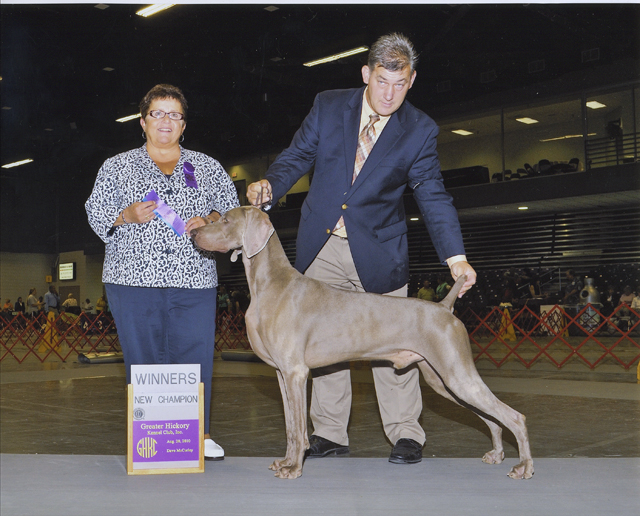
"Maverick" a rescued Weimaraner, to participate in this year's Westminster Kennel Club show!
The Westminster Kennel Club Dog Show spotlights the creme de la creme of the dog world. And in a curious twist of fate, the world of canine rescue is also a hot topic of discussion at this year's show.


In one of the most heartwarming stories ever, we learn of a Weimaraner named Maverick. Maverick's owner purchased him from Craigslist a couple of years ago. Seems Maverick was in very poor condition, underweight, neglected and unhealthy. But within a few months, under the tender loving care of his new owner, Maverick began to go to dog shows....and win...and win big....and as a Grand Champion, he will now be a participant in Westminster, the most prestigious show of the year.

Maverick's owner feels that his dog was a “rescue”. Indeed, Maverick could well have ended up in a shelter or rescue had he not been sold on Craigslist. Had that happened, Maverick would almost certainly have been neutered. What a pity that would have been for the Weimaraner world.

I've often thought that the requirement to spay/neuter every rescued dog was not only unnecessary, and potentially detrimental to health, but also contributes to narrowing of breed gene pools. Canine geneticists advise us to keep as many individuals as possible in a breed's gene pool. Genetic diversity is necessary to maintain overall health, vigor, longevity, fertility and optimal immune system function. In the case of purebreds, spay/neuter of all rescues is a very unwise move that reduces genetic diversity. While of course we must be discriminating in selecting individuals for breeding, considering health and good temperament, it's also a beneficial goal to include as many individuals in breeding programs as possible to help promote diversity and avoid the pitfalls of inbreeding. Another benefit of genetic diversity is lower incidence of breed-specific genetic health problems.

Wholescale spay/neuter, along with over-use for breeding of just a few dogs deemed exceptional, dangerously narrows the gene pools of our breeds. Maverick’s story is a success story not only for him and for his owner, but for his future generations. They would never be born if the typical “rescue” ending of a routinely performed neuter had spelled the end of Maverick’s tale. Thankfully, Maverick’s genes were ultimately preserved.

Animal rights groups have convinced us that it is merciful to spay and neuter all the animals that pass through a shelter or rescue situation. They imply that breeding is a cruel fate for animals. I think they are wrong. Dogs enjoy the activity of raising their young, just as we do.


And speaking of animal rights groups and Westminster, we also learned this past week of the termination of the Pedigree “Dogs Rule” advertising/adoption campaign that has been held during the Westminster KC show for the past several years. In my case, there was an immediate visceral objection to seeing presented abused and neglected rescued dogs (very few of which were intentionally-bred purebreds) at an event of this nature. Animal rights groups do believe that purebred dog breeding is to blame for shelter intakes and they make no bones about voicing that opinion. Even the narrator of the Pedigree commercials, David Duchovny, is an “animal rights” proponent and a PETA supporter.


So, way back in 2007, I was curious about the Pedigree campaign which was jointly conducted with the American Humane Association.


I checked out the American Humane Association website, to see where they stood on issues. The page I referenced has since disappeared and the website has been streamlined, but I looked at their website and discovered that:


  • They support AR agenda legislation in various states.
  • They advocate for mandatory, pre-pubescent spay-neuter.
  • They oppose medical research using animals.
  • They promote various “freedoms” for farm animals.
  • They oppose commercial, for-profit breeding, slurring this as “puppy mills”, and state that this is inherently cruel.
  • They support “guardianship” as opposed to “ownership”.
  • They oppose any and all tail docking, ear cropping, debarking or declawing.
  • They oppose racing and coursing.
  • They support mandatory microchipping.
The AHA was surely laughing at us, because they were successful in perpetuating the image of show dogs as the source of shelter intakes. And they did it at the biggest kennel club event of the year! And the dog breeders actually CHEERED for them!


I found it curious that during the Pedigree drive and fundraiser conducted during the Westminster KC show in 2007, there was never any mention of the many breed rescue groups, run primarily by breeders and breed club volunteers. I did not pay much attention to the commercials in subsequent years, so I don’t know if breed rescue ever was mentioned.


The Pedigree commercials referred to AKC show dogs as “lucky”….saying shelter dogs are “not as lucky as the show dogs you see here”. The implication was that these show dogs are the few, the minority, that most dogs end up at shelters. Not true. A very small percentage of dogs end up at animal shelters each year….check the nationwide numbers, it is around 3-4% of owned dogs. The vast majority of dogs in the US are cared for in a responsible and humane manner, and do not end up abandoned. Sometimes, I think it is too easy to forget that, especially for those who work day-to-day in a stressful shelter or rescue setting.


It’s not a result of “luck” that the vast majority of dogs lead a good life. It is the result of plenty of hard work, effort and dedication on the part of their owners. But mostly, it's the result of our love affair with our dogs. Westminster is a quintessential display of that affection we hold for "man's best friend".


Responsible ownership and breeding is constantly under attack from AR groups. Good riddance to the Pedigree commercials at Westminster.

Remember, it was just a couple of years ago that PETA interrupted the Westminster show with their cheap shot-style protests. Maybe that is when the club decided enough was enough and to sever ties with animal rights groups:

http://time4dogs.blogspot.com/2010/02/parade-of-mutants-seen-in-westminster.html


"Rescued Weimaraner to show at Westminster":

http://www.lifewithdogs.tv/2012/02/rescued-weimaraner-to-show-at-westminster-2012/


"Pedigree replaced as Westminster sponsor":
http://yesbiscuit.wordpress.com/2012/02/10/pedigree-replaced-as-westminster-sponsor-after-24-years/

Donderdag 09 Februarie 2012

Ranger's Proposal


The City of Chula Vista, California, recently established a task force to attempt to develop ways to reduce shelter intakes. (See “Senseless in San Diego” on this blog to be brought up to speed on the situation in Chula Vista). The task force is composed of rescuers, breeders and city employees.


Sharon Hamolsky, a self-proclaimed “animal advocate”, recently brought a powerpoint presentation to the City, called “Ranger’s Proposal.” The proposal is named after her dog “Ranger.” Ms. Hamolsky holds a B.A. in religion (biblical studies) and she is a licensed pilot. No credentials in animal husbandry, however. Imagine that!

“We have to weed out unscrupulous breeders who put profit before humane care for pets. We have to put unscrupulous breeders out-of-business….All prospective pet owners want a healthy animal”, the presentation begins.


OK, so far so good. We are all for humane care for pets, most of us agree that the unscrupulous should be put out of business. And, a healthy animal is always a good thing, particularly when looking for a pet.


"Ranger's Proposal will ensure prospective pet owners will be buying a quality puppy or kitten that meets very high standards.” Hamolsky states. Great! Maybe they are coming up with a plan to reduce the numbers of puppies smuggled in from Mexico?


Shelter workers favor adopting a pet from a shelter, or a rescue, Hamolsky continues. “But, if you absolutely must have a purebred puppy or kitten, ‘Ranger's Proposal’ will ensure the health and well-being of the pet.”


Fabulous! We can have guarantees for health and well-being! Let’s see the rest of the proposal to know how this miraculous feat will be accomplished.


First, we are told that breeders must pay for a special breeder’s license, and pay to be listed on a special Licensed Breeder website, and pay to be included in a 1-800 U-verify phone line for breeders. OK, so far I’m not seeing how this proposal will ensure health and well-being of the pet. It looks like the money is going to go to city bureaucrats, not for veterinary care, or to buy food or new toys. Hmmm.


Next, Hamolsky explains that breeder licensing is a requirement in the City of Los Angeles. However, she neglects to mention that LA’s breeder licensing and mandatory spay-neuter laws have been an abject failure. The cost for a breeder’s permit is $235 per year, and must be paid for any intact dog, whether or not the dog is ever bred. There is a four-page application for said permit, and I’d be surprised if any have applications have been submitted to date. Shelter numbers and deaths have risen sharply in Los Angeles under the brunt of these new fees, rules and regulations.


Still not seeing how any of this promotes health and well-being of our pets. It’s all about extorting money.


Next, Ms. Hamolsky presents a list of “approved breeder criteria” which she claims is approved by Bill Bruce, the very successful director of Calgary, Alberta’s animal control department. Mr. Bruce is a strong proponent of licensing for both dogs and cats.


However, the purpose of the licensing is to facilitate returning lost pets to their owners. Licensed pets are even given a free ride home. Mr. Bruce has stated in public seminars that as long as the owner licenses, he doesn’t care how many pets they have or what they do with them. So I am rather skeptical of Ms. Hamolsky’s claim that Bill Bruce approved her list of criteria for inclusion on the licensed breeder website. That would be rather out of character for him.


The requirements include:


• Must purchase a breeder’s license


• Annual physical exams for the breeding animals


• Owner must follow the veterinary recommendations for preventive health care


• Veterinary recommendations must be entered into a log book, with dates of compliance, and this book must be available for inspection 24/7.


• Unannounced inspections at any time, with a minimum charge of $100 per inspection. You must pay in advance or lose your breeder’s license, and lose your animals (how does one pay in advance for an unscheduled inspection?)


• Limit of one litter per year, and four per lifetime of the animal


• Must pay city business license fees, state and local taxes and state sales taxes.


• (Insert here a drone-like comment about how breeders contribute to “overpopulation”, a condition which does not exist in San Diego County.)


• Prohibition of pet sales in pet stores unless the animal is a “rescue”


• Recommendation to require microchip or tattoo


Whether or not any of this promotes health and well-being of the pet is highly debatable. It definitely would serve to bloat the government coffers, and beef up the veterinarians' paychecks. Hey, City Councilmember Rudy Ramirez’s sister is a veterinarian! Now I think we can understand the impetus for these ideas.


Lastly, Ms. Hamolsky suggests launching an ad campaign featuring male stars and athletes to promote sterilization of male dogs. WAIT a minute! What does neutering have to do with promoting health and well-being of pets? There are few genuine medical conditions that require neutering, and many health problems that can occur as a result of neutering. And what does a public ad campaign for neutering have to do with breeder licensing?


All in all, this is a very schizophrenic proposal, and will only serve to eliminate local sources of healthy, well-bred pets. Breeding dogs is generally a money-losing proposition, and heaping more fees, permits, inspections and other hassles on those who breed an occasional litter will only cause them to give up altogether.


Ah, well, there’s always Mexico; the border is just a few short miles from Chula Vista. They’ll be happy to fill our orders for pets.

Dinsdag 07 Februarie 2012

Time 4 Prayer

We could all do with a bit more prayer in our daily lives.....

Sleeping with the Enemy


HSUS revealed in a press release yesterday that they have partnered up with some naive AKC breeders to form a Dog Breeder's Advisory and Resource Council. Hmm....the D-BARC. Rest assured, that name and its acronym are no coincidence! This is a blatant attempt to silence the voice of those who are independent thinkers. It's a typical divide-and-conquer ploy by experts in that tactic.

"The new partnership will help consumers shop wisely for a puppy by recognizing the difference between responsible breeders and puppy mills." the announcement states. "...composed of responsible dog breeders from across the country. Council members will advise HSUS on dog health and welfare issues, and talk to the general public about what constitutes proper breeding practices, promoting the health of the parents and the puppies."


Proper breeding practices according to WHO? While certain "hobby breeders" may believe that championships and adherence to a breed standard are the most important criteria for success and prerequisites for breeding, others may have different priorities. They may wish to produce nice companions, good workers, or perhaps just would like to experience the joy of raising a litter of puppies. Nothing wrong with that! 
 

Next we hear from one of the actual participants in the program:


"We want to protect our right to be responsible breeders and to enjoy and bond with our dogs in show and performance events, but if we think for one minute that ignoring the problem of cruelty to animals makes us responsible breeders and protects our rights, I believe we're wrong," says Council member and AKC Breeder of Merit, Kathryn McGriff. "We can no longer sweep puppy mills under the rug."


Apparently, this gal believes that breeding dogs=cruelty="puppy mill". Unless done her way. After all, she is lauded as an AKC "Breeder of Merit". A title signifying that the breeder registers all their dogs with AKC, and does some breed-specific health testing. This group of meritorious breeders is certainly not inherently more worthy than any other group of breeders.  
  
McGriff breeds Clumber Spaniels, a breed so rare that it is threatened with extinction. But soon, if HSUS and these "responsible" breeders have their way, laws will be crafted to demand that all breeders fit a certain, limited mold. It will be their way, or the highway. HSUS will use this D-BARC panel to try to eliminate any breeders who are independent thinkers, or who dare to wish to make a profit.


And where does McGriff come up with the ridiculous notion that anyone is sweeping the issue of substandard breeders under the rug? Has she read the APHIS rules? The many "puppy mill" campaigns in the popular press?

There are umpteen rules and regulations, both federal and local, that delineate humane care and treatment of dogs. If people are not complying with rules for care of their dogs then they can be fined, or, in some extreme cases, even have their dogs "rescued" from the situation.


PLENTY of laws exist already on the books. Substandard breeders are exposed every day, and they either reform their practices or they are put out of business. The current system is working quite handily, and it is the finest system in existence. We certainly do not lack sufficient guidelines or laws when it comes to taking care of our animals. Heck, we have plenty of nosy bureaucrats interested in controlling our every step! And now, these few foolish Breeders of Merit are inviting yet more regulatory shackles upon all of us through participation in a program that seeks to "advise" the public on a narrow view of breeding practices. How dare they place all breeders in jeopardy!  

"The primary aim of The HSUS is to promote pet adoption from shelters and rescue groups, and encourage consumers who choose to purchase a puppy to buy from a responsible breeder instead of inhumane, commercial breeding facilities known as puppy mills." the press release continues.

According to HSUS president, Wayne Pacelle, "We commend the responsible breeders who are showing leadership in their community and speaking out against the abusive operations that treat dogs not like loving family members, but like a cash crop."


Reality check for everyone.


DOGS ARE NOT PEOPLE. They are not equivalent to a family member, unless the owner CHOOSES to treat them as such. Many dogs are bred for work, for hunting, for protection, for guides to the blind and other service. While many dogs are also bred as companions, every one of the aforementioned purposes is just fine too.


There is absolutely nothing wrong with breeding dogs as a business. Gosh, how I wish I could make a living doing what I love, being around my dogs 24/7. But alas, that is not possible for those who breed only on a small scale. And now those who breed as a business are under direct attack from all fronts.


The HSUS puts the emphasis on "adoption" from shelters and "rescue" groups. Never mind the fact that shelters and rescues often import dogs from other areas and even other countries because they don't have enough dogs available for sale.


Today I also received word about another show breeder who has fallen under the spell of the HSUS. Just read her note from a message board on the HSUS's website!


Aloha, my name is Theresa Donnelly, and I am the secretary of Boxer Club of Hawaii. Thank you so much for taking this on and questioning the AKC. I am involved with helping pass some animal protection bills here in Hawaii, and I have really enjoyed working with HSUS. I have been hoping that the AKC could partner with HSUS for some time. The fact that health is not a standard that is judged against in confirmation shows is wrong. As a hobby breeder, I feel health and temperament should come before appearance. I can only hope that the AKC will stop opposing bills like our commercial breed bill here. It is too bad too, because AKC has a lot of great programs and it hurts both sides when we don't work together. I thank you for standing up for what is right and confronting them for their breeding standards. We can only hope that as time goes by, more ethical breeders will join the fight. Theresa


What can we reasonably expect from a ditzy chick who can't even spell "conformation"? And who thinks you can judge health in a show ring? Absolutely moronic. Where has she been all these many months that breeders have been under attack? She must be quite insulated from reality there in the Hawaiian islands. If there are more like her, no wonder we read this week that the State of Hawaii is now proposing a law requiring every dog sold be sterilized.* That has HSUS written all over it. Pet extinction in paradise.


Are these few sanctimonious and pious show breeders partnering up with HSUS in a pathetic attempt to eliminate the competition? Or are they really that clueless about the HSUS?


Sadly, some AKC "Breeders of Merit" have joined the circular firing squad. There is nothing meritorious about attempting to eliminate the rights of others to participate in breeding programs that comply with government regulations for humane care and treatment.


Theresa Donnelly, Boxer Club secretary, at a pet store protest in Hawaii on Jan 28, 2012. Wake up and smell the coffee, Toots!


Maandag 06 Februarie 2012

COMPANIES THAT TEST ON DOGS AND OTHER ANIMALS

While I understand that it may be difficult to avoid all products,any effort you make to cut back on purchasing from these companies will save the lives of many animals including cats, dogs, guinea pigs, mice, monkeys, pigs, rabbits, rats, sheep and other innocent animals from pain, cruelty and death.

Please don't use me for research & then kill me, I deserve better!
33 animals die in laboratories per every second that passes - world wide. Yet there are around 450 alternative methods to test product without using animals - and many successful companies round the world use these alternative methods.

Companies that do test on animals commonly use the DraizeTest (all animals that receive this painful test are killed after the test is administered and when the test is administered the animals are not given any type of painkiller) and the LD-20Test (Lethal Dose 50 Test). Many companies also use vivisection - the practice of cutting into or using invasive techniques on living animals.

Research has shown that testing on animals is a highly ineffectiveway to identify products and drugs that are harmful to humans. 

In fact most of the tests done on animals are actually discarded! So, if you are still under the impression that testing on animals is an unfortunate necessity to protect humans from harm you now know otherwise! Most researchers and doctors admit that due to the anatomic and physiological differences between humans and non-human animals the tests are irrelevant! For answers too many frequently asked questions (FAQ) about animal experimentation and why it is not effective or necessary you can click here.

As Aga Khan (Prince Sadruddin) said in 1933, "The philosophy behind vivisection, the sacrifice of creatures we regard as 'inferior' beings, differs little from that behind the concentration camp or the slave trader."

Take a look at the logo’s below - you will recognize many of them- including pet food manufacturers! 

You can then scroll below for a more comprehensive listing which includes many companies that are common household names. Below that listing you can click to see an even more extensive international listing. If you would like to search for a specific company to see if they test on animals - but do not see them listed below you can click here to do a custom search by company name. 

Conversely if you would like to see an extensive list of companies world-wide who do not test on animals you can click here.


A
Alcon Labs
Allergan, Inc.
Answer
Arm & Hammer
ArmorAll
Arrid
Axe
Aziza

B
Bain de Soleil
Ban Roll-on
Banana Boat
Bausch & Lomb
Benckiser
BenGay
Biotherm
Block Drug Co. Inc.
(The) Body Shop
Bounty
Boyle-Midway
Bristol-Myers Squibb Co.

C
Cacherel
Cargill
Carpet Fresh
Carter-Wallace
Chesebrough-Ponds
Church & Dwight
Clarion
Clairol
Clear Choice
Clorox
Commerce Drug Co.
Consumer Value Stores
Coppertone
Coty
Cover Girl
Crest

D
Dana Perfumes
Dawn
Del Laboratories
Desitin
Dial Corporation
Diversey
Dove
Dow Brands
Drackett Products Co.
Drano

E
EcoLab
Eli Lilly & Co.
El Sanofi Inc.
Elizabeth Arden
Erno Laszlo

F
Faberge
Fantastik
Fendi
Final Net
Finesse
First Response
Flame Glow

G
Garnier
Giorgio Armani
Givaudan-Roure
Glade
Glass Plus
H

Helena Rubinstein
Helene Curtis Industries
Herbal Essences
Huggies

I
ISO
Ivory

J
Jhirmack
Johnson & Johnson
Johnson Products Co.
Jovan

K
Kaboom
Keri
Kimberly-Clark Corp
Kiwi Brands
Kleenex

L
Lady's Choice
Lancaster
Lancome
Lava
Lever Brothers
Lipton
Listerine
L'Oreal USA
Lubriderm
Lux
Lysol

M
Mars (candy company)
Matrix Essentials
Max Factor
Maybelline
Mead
Mop & Glo

N
Nair
Naturelle
Neutrogena
Neutron Industries, Inc.

O
Olean
Orange Glo
Oscar de la Renta
OxiClean

P
Pantene
Parfums International
Pearl Drops
Pennex
Pfizer, Inc.
Pine-Sol
Plax
Playtex Corporation
Pledge
Polident
Ponds
Post-It
Prestige Brands
Prince Matchabelli
Proctor & Gamble Co.

Q
Quintessence

R
Raid
Ralph Lauren Fragrances
Reckitt Benckiser
Redken
Resolve
Richardson-Vicks

S
Sally Beauty Supply
Sally Hansen
Sanofi
SC Johnson & Son
Schering-Plough
Scotch
Scott Paper Co.
Scrub Free
Sensodyne
Signal
SmithKline Beecham
Snobal
SoftSheen
S.O.S.
Stanhome Inc.
Sterling Drug
Suave
Sun Star
Sunsilk

T
TCB Naturals
Tegrin
3M
Tide
Tilex
Trojan
Truvia

U
Unilever

V
Vaseline
Vichy
Vidal Sassoon
Visine
Vivid

W
Warner-Lambert
Westwood Pharmaceuticals
White Shoulders
Whitehall Laboratories
Windex
Woolite 

If you would like to view a more extensive world-wide listing you can click here.


Aangedryf deur Blogger.

Labels